Navštivte nás na FOR CARAVAN 5.–8. Listopadu 2026 v Brně.
Corsica: From the mountains to the wild sea

Corsica is rightly called the island of beauty. In a relatively small area, it offers high mountains, deep gorges, impenetrable forests, arid plains and a coastline with a clear sea.
In just one day, you can drive along a rocky mountain road, swim in a river hidden between rocks, and watch the sunset over the Mediterranean Sea in the evening.
Our goal wasn't just to drive around Corsica on the main roads. We wanted to see it from all sides – from the northern coast through the mountainous interior to the wild south.
It wasn't about overcoming extreme obstacles, but about real travel.
We arrived on the island by the morning ferry to Bastia. The very arrival at the port had a unique atmosphere. Behind the old houses, green slopes rise steeply and low clouds hung over the city.
Corsica reminded us right from the start that the sea and mountains exist right next to each other here.
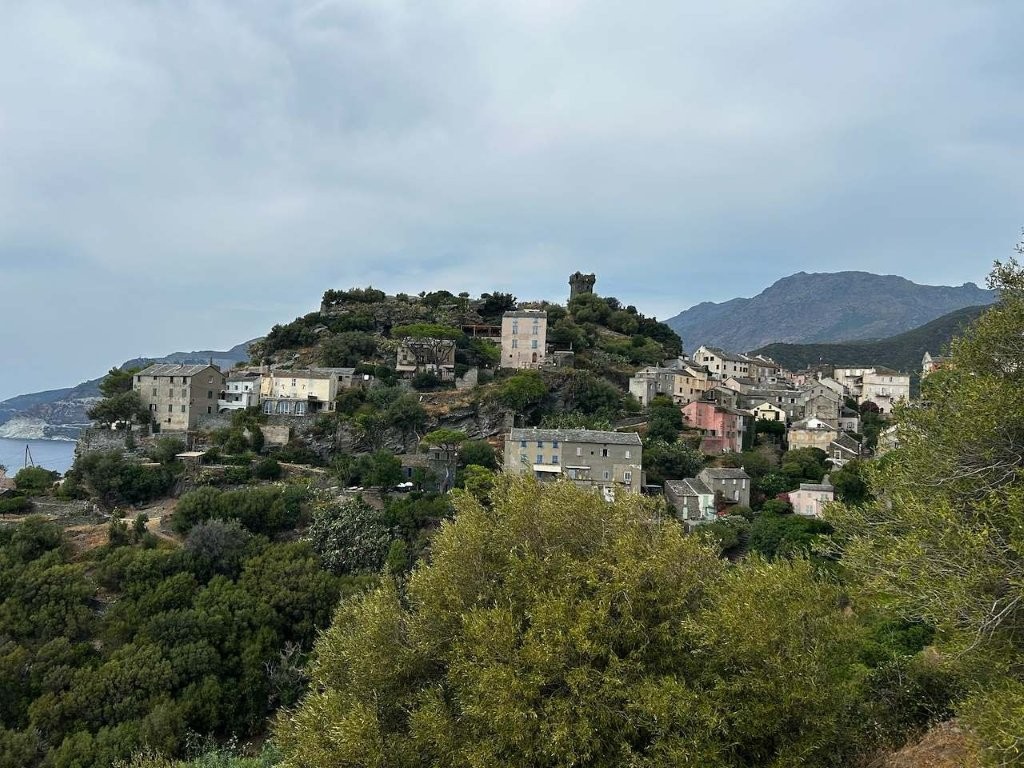
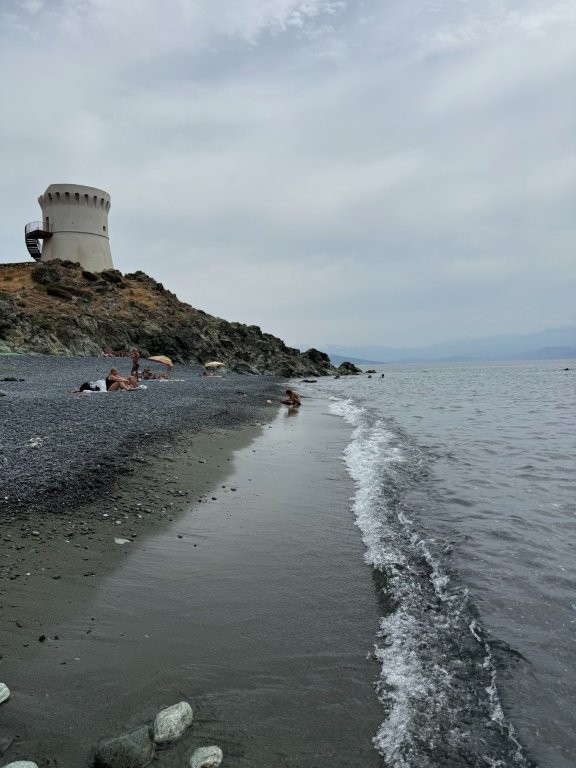
After getting off the ferry, we headed to the Cap Corse peninsula. The narrow coastal road wound high above the sea, offering views of small fishing ports, stone towers, and villages clinging to the hillsides.
In some places the road is barely wide enough for two cars. With a larger expedition truck, you have to slow down before every bend and expect a bus or van coming the other way.
Cap Corse is not a place for fast driving. The distances on the map look short, but the journey takes much longer than one would expect.
But the constant twists and turns are offset by the beautiful views. We stopped at abandoned watchtowers, small harbors, and lookouts where the waves crashed against the dark rocks below us.
From the north we continued towards the Désert des Agriates. The name “Agriates Desert” might sound like you’d expect sand dunes here. In reality, it’s a wild, rocky landscape covered in low vegetation – maquis.
Some of the coastal access roads are rough, dusty and full of rocks, potholes and deeper ruts. In dry weather this is not an extreme terrain, but with a fully loaded car you need to drive slowly.
After rain, the nature of the roads can change quickly.
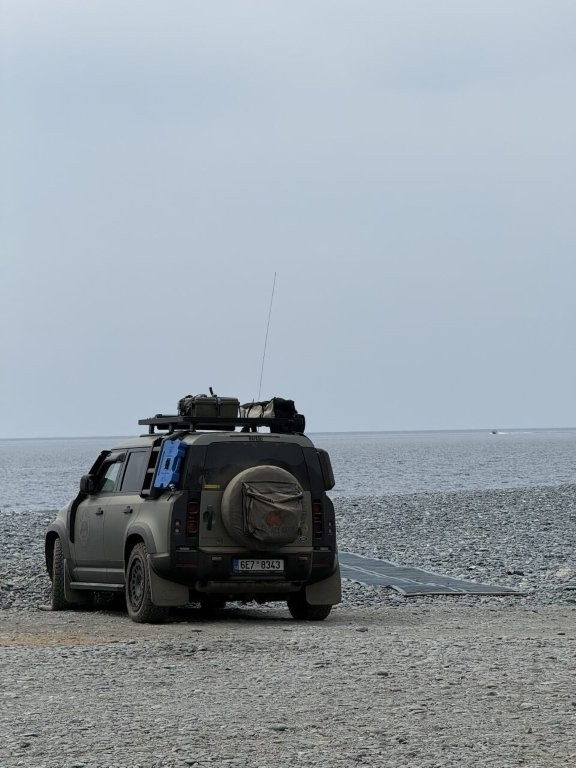
The reward for a few hours of slow driving are secluded bays with white sand and turquoise water. When we finally reached the coast, the hot engine quietly crackled and the wind brought the smell of the sea mixed with the aroma of wild herbs. It is at moments like these that one understands why one travels in an off-road vehicle. It is not just about the ability to overcome an obstacle, but the opportunity to get to places that remain off the usual tourist routes.
From the coast we headed inland, towards Corte. The landscape began to change rapidly.
The dry plains gave way to chestnut forests, steep slopes and rock walls. The road became more and more winding and the temperature gradually dropped.
Corte feels like the true mountain heart of the island. The citadel, built on a high rock, towers over the city and the mighty Corsican mountains rise around it. The narrow streets of the old town are filled with the aromas of coffee, pastries and local cured meats.
After days spent on the road, we replenished our food and water supplies.
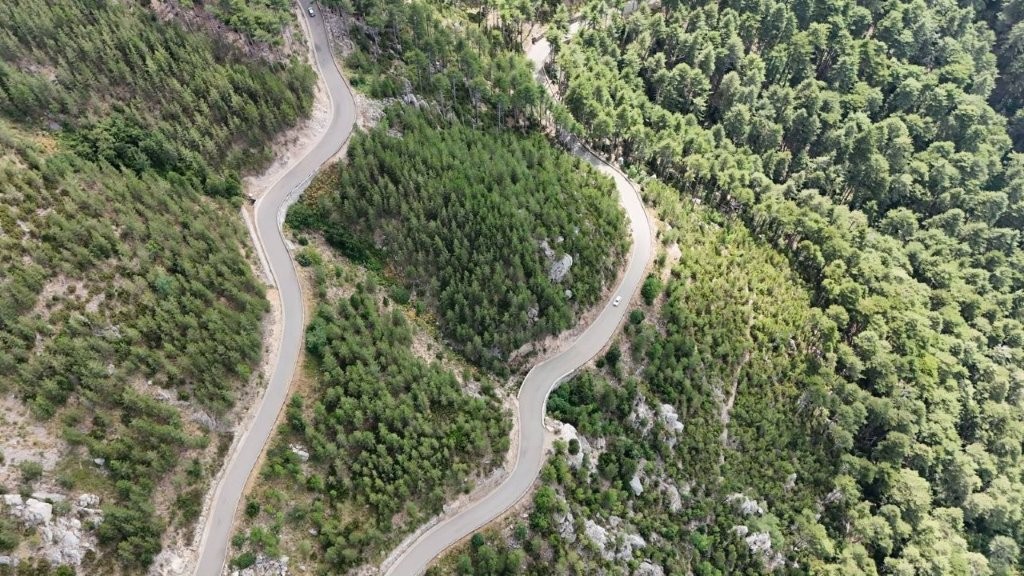
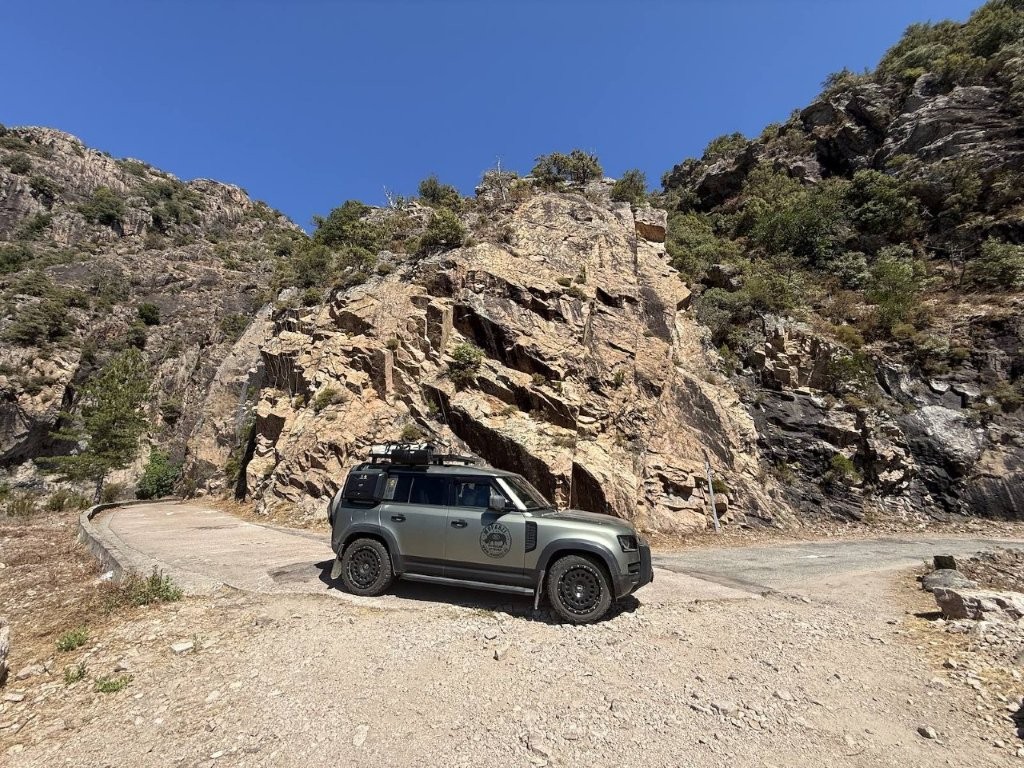
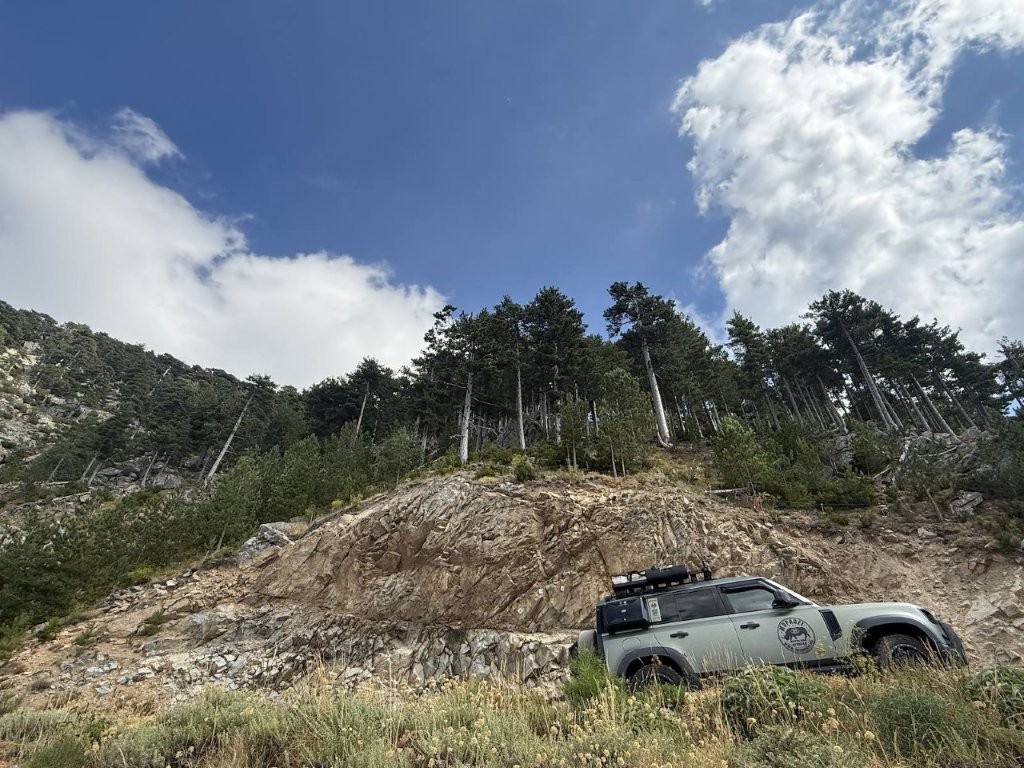
After Corte we left the main road and took smaller mountain roads. Some were narrow, cracked and covered in places with fallen rocks.
However, the biggest problem was not the exits or rocks, but the branches interfering with the road and the very limited space for turning.
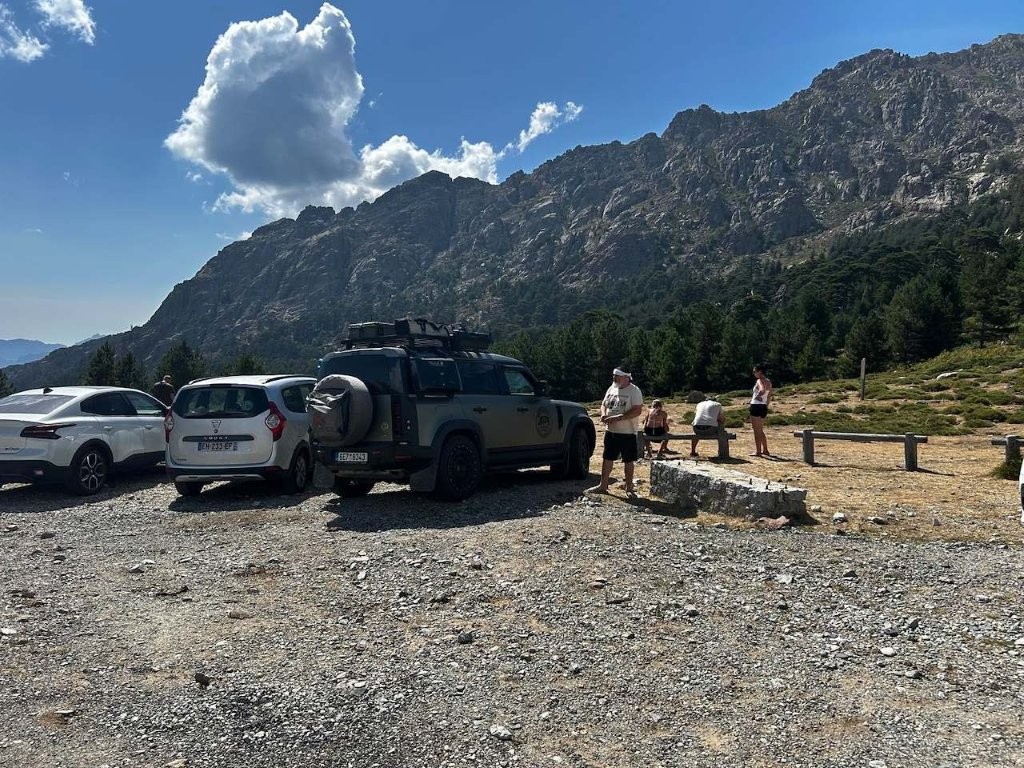
The Corsican hinterland is a completely different world from the coastal resorts. Peaks towering over two thousand meters rise above the road and icy rivers flow deep below. In the mountain forests, we often did not meet another car for many kilometers.
One of the most impressive parts of the journey was the drive through the passes and forests in the center of the island. The weather can change in a matter of minutes. The sun gave way to fog, which shrouded the surrounding mountains and turned the rocky road into a mysterious trail.
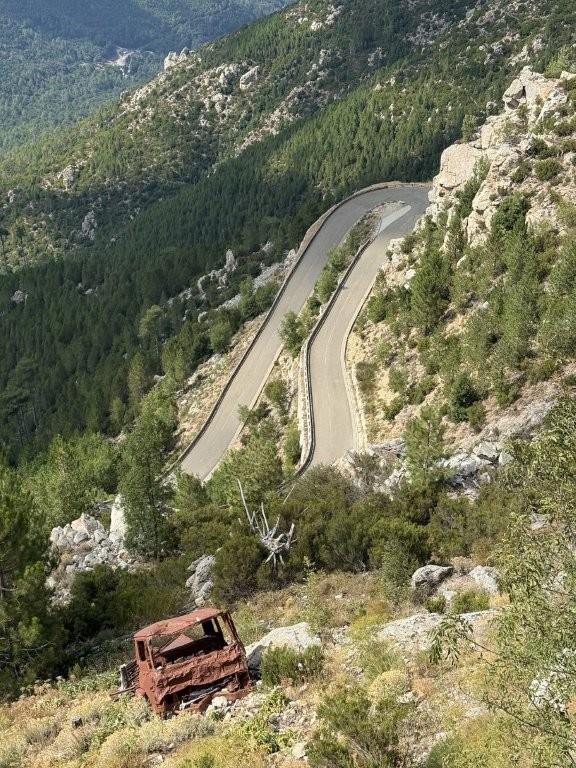
In Corsica, caution is more important than speed. The roads are often narrow, waterlogged or damaged by landslides. If you are unsure, it is better to first walk over an obstacle before continuing.
In the afternoon we stopped at a mountain river. The water was perfectly clear and formed natural pools between huge boulders. After a hot day behind the wheel, swimming in the icy water was almost a cleansing ritual.
In the evening we prepared a simple dinner and listened only to the flowing of the river and the rustling of the forest.
The next part of the journey took us across the island to Ajaccio. As the crow flies, the west coast is not far away, but in the Corsican mountains, distances mean nothing. The roads climb into passes, skirt deep valleys, and descend again to the river, only to start another exit.
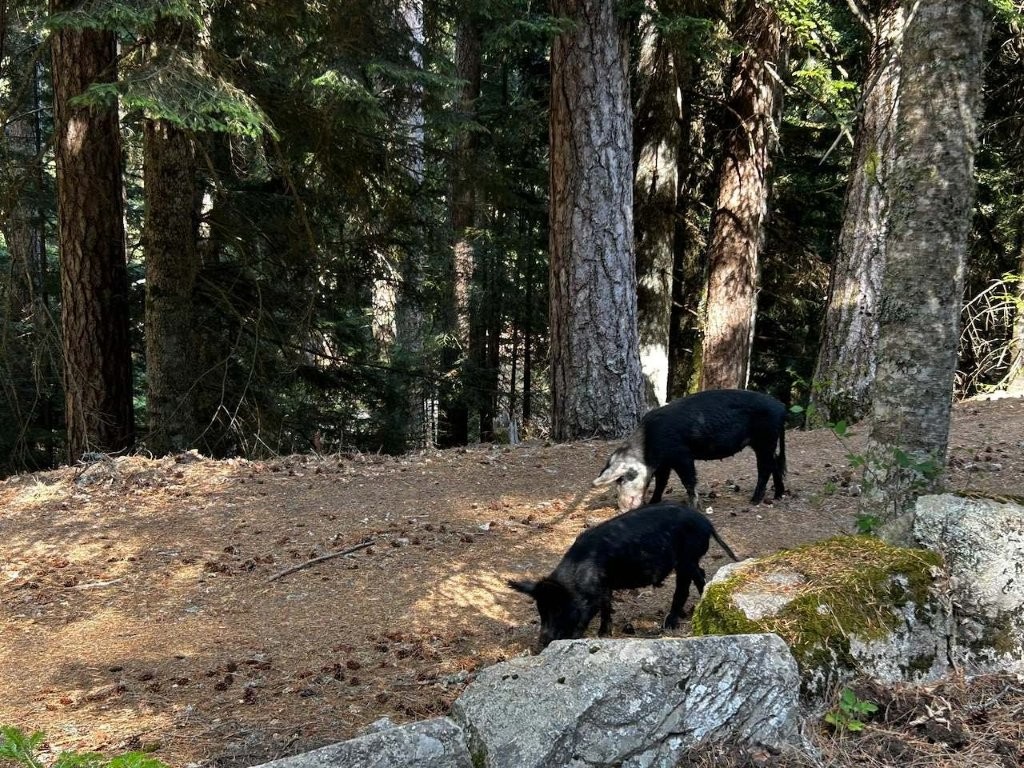
Constant concentration is required behind the wheel. Animals often roam freely here. A herd of goats may appear around the bend, pigs resting by the roadside or a cow standing in the middle of the road. Corsicans also drive briskly on familiar roads, so rear-view mirrors are as important as the view in front of the bonnet.
When we caught sight of the sea in the distance after a few hours, it felt like we had crossed an entire continent. Green mountain forests gave way to red rocks, the smell of resin gave way to salty air, and the west coast opened up before us.
The coast around Porto and the Calanques de Piana rock formations are among the most dramatic in Corsica. The red cliffs here drop almost vertically into the sea and a narrow road is carved right into their walls. In the setting sun, the landscape takes on an orange to red hue.
Low rock overhangs, tight turns and small parking areas don't give much space. Nevertheless, the evening over the west coast was one of the most powerful moments of the entire trip.
The sun was slowly disappearing over the horizon, the sea was calm and the red rocks were gradually darkening. Dinner was being prepared on the stove and a bottle of wine was on the table. After a hard day, we needed nothing more.
From Ajaccio we continued south. The road alternated along the coast and inland again. We drove through a landscape of cork oaks, granite rocks and small villages where time seemed to have stopped.
The surroundings of Sartène have a rugged and authentic feel. The stone houses, narrow streets and surrounding mountainous landscape remind us that Corsica has always retained its own character. It was in the south that we again sought out smaller roads leading to the coast and into the hills.
Some routes ended with a barrier or a ban on entry. This must be respected in Corsica. Many lands are private and in the summer, access to the forests is restricted due to the risk of fires.
The real adventure lies in finding legal routes and traveling through the landscape with respect.
Bonifacio welcomed us with its bright white cliffs. The old town stands high above the sea and, when viewed from the harbor, looks as if it is about to collapse into the water at any moment. Along the mountain roads and dusty tracks, the restaurants and bustling streets felt almost like a return to civilization.
For our last night, we headed out of town again. We found a legal spot near the shore where we could hear the soft surf.
We sat next to the car and thought about the entire journey. The dusty roads of Agriates, the cold rivers in the middle of the mountains, the fog in the passes, the red rocks in the west and the white cliffs of Bonifacio.
Corsica showed us many different faces in just a few days.
In the morning we packed up camp and headed to the port. The car was covered in dust, there were a few fine scratches from branches on the sides, and the interior smelled of a mixture of coffee, the sea, and mountain forest.
They were small traces of the road that we definitely didn't want to wash away right away.
Corsica is not a place to be explored in a hurry. Although the distances look small on the map, each journey can turn into a day-long adventure. However, the slow pace is its greatest asset.
A 4×4 vehicle opens the way to more remote beaches, mountain viewpoints and forgotten villages. But at the same time, it requires respect for nature, local people and the rules of movement in the landscape.
Not every line on the map is a public road, and not every beautiful place is suitable for spending the night.
Corsica taught us that a true expedition doesn't have to take place thousands of kilometers from Europe. Sometimes all you need to do is cross the sea, leave the main road and head into the mountains. Around the next bend, there may be a rocky road, a herd of goats, an abandoned village or a view that makes it worth stopping the engine and just being silent for a moment.
And that's the magic of Corsica. It's wild, beautiful and unpredictable. Once you've crossed it, the journey home from the port is no longer just a return from an ordinary holiday.
It is a return from a little adventure that will stay with you long after the last Corsican dust has disappeared from the bodywork.



This online store stores cookies that help it function properly. By using our services, you agree to their use.