Navštivte nás na FOR CARAVAN 5.–8. Listopadu 2026 v Brně.
Blog

Individually, anytime and anywhere because 4x4!
Europe is not only about picturesque cities and historical monuments. Although it doesn't seem like it at first glance, the old continent offers plenty of adventure and independent travel for adventurers traveling individually with 4x4 vehicles. In this article, we will offer you some tips for trips where you can use the possibilities of your 4x4 vehicle. But remember the principles of offroad travel! Do not drive off marked and traveled roads into the wild. Camp and make fires only in designated and suitable places. After departure, please clean up the campsite and take away your rubbish. Also, don't forget to clean everything up after morning bodily needs and hygiene. It's simple, bury everything with a shovel. It is not difficult to follow these simple principles, which will ensure that the public and the relevant nature protection authorities will not oppose us, and we will be able to continue to travel freely.
-
Spain: Picos de Europa These mountains offer picturesque mountain scenery, endless pastures and breathtaking mountain passes. A 4x4 vehicle will allow you to penetrate these mountains and thus discover beauties that otherwise remain hidden to "regular" tourists.
-
Spain, France, Andorra: Pyrenees The mountain massif stretching between Spain and France offers countless off-road routes with beautiful views, serpentine exits and maintained campsites. A ride through mountain passes and picturesque traditional villages will allow you to discover and get to know the beauty of this European wilderness.
-
Romania: Transfagaras and Transalpina These are some of the most beautiful roads in the world according to Top Gear. The Romanian Carpathians as a whole are beautiful and offer complete versatility in the use of your equipped 4x4 vehicle. Where else in Europe will you see bears so close to the roads that you can almost touch them. But beware, they are still wild animals!
-
Sweden: Sarek National Park It is one of the oldest national parks in Europe. Here we will see wild mountains, glaciers and untouched, beautiful nature. Unpaved roads will take us where organized tour groups can't go.
-
Iceland Its wildness has absorbed many travelers who return here repeatedly. Waterfalls, geysers, volcanoes, thermal springs and Puffins are the main destinations for travelers. Everyone wants to experience everything as intensely as possible, as much as the local nature allows. Don't just focus on the main circuit along the coast, visit the inland as well. You will not regret.
-
Poland: Bielsko práles A beautiful destination on the border of Poland and Belarus, where we can see wild European Bison and many other animals such as moose, deer, wolves. But the main magnet is the bison living here in the largest herd in the world.
-
Italy, France: Old Alpine Military Roads You can enjoy the wildness of the Ligurian Alps stretching between Italy and France to the fullest in a 4x4 vehicle. Mainly during the First World War, this area was heavily fortified, which also brought about the construction of fortress roads that we can now use for our wild travels. Fort Central, Fort Jafferau, Parpaillon tunnel, Mount Somellier is what you won't see anywhere else. A typical animal inhabiting this area is the Marmot. Your little fellow travelers will be very happy to watch them wandering among the burrows at the foot of the mountains.
-
Bosnia and Herzegovina Lake Šator, the old Željava military airport, the Strbačky Buk and Martin Brod waterfalls, the Una river, the old Olympic sports grounds (Sarajevo 1984) and others. With its beautiful nature, friendly people, good cuisine and clashing cultures, Bosnia offers many unforgettable itineraries for travelers. Take care of your safety in the mountains and forests! Some areas still bear remnants of the war from the early 1990s and are mined.
-
Croatia: Northern Velebit, the Krka river with waterfalls, the island of Brač. The beautiful limestone mountains with gravel roads, where the legendary films with the Apache Indian chief Vinnetou were filmed, will offer you countless wonderful experiences. On the island of Brač, we can admire several submarine bunkers excavated in the mountain massifs.
-
Albania: Drin River, Komani Reservoir Lake, Bajram Curri, Theti National Park with Theth Village, Prokletije National Park, Škodar Lake, Valbona River, Lura Lakes There is a lot to see in this "wild" Balkan country. In addition to natural beauty, we will also see countless concrete domes, bunkers that were built by the Albanian dictator Hodža, as his attitude to another form of communism. Albania is the land of eagles and Mercedes. Who does not have a Mercedes, as if he did not exist.

Water on the go.
When traveling to remote places, and during hot summer days, it is essential to always have enough water for personal hygiene, cooking and drinking. It is not for nothing that desert guides recommend having 6 liters of water per person per day for each day spent in the desert. Based on our personal years of experience, we have a solution for you.
We have selected products that emphasize functionality, durability, ease of use and, of course, quality. Canisters and tanks from the American company WaterPort meet all these criteria.
Features of WaterPort products:
- Durable and healthy materials.
- Textured plastic in black color that maintains a pleasant water temperature on sunny days.
- Widely used for transporting water, showering, washing vehicles and equipment from dust, sand and mud.
Use:
- Transporting water to roads.
- Showering for yourself or pets.
- Rinsing the vehicle, shoes and other equipment.
WaterPort products are used not only by adventurers and travelers, but also by IZS units, the military, fishermen, farmers, dog trainers and many others around the world.
Filling and control:
- Intuitive and simple.
- Portable air compressor or air hose from car spare tire (not included) for pressurizing larger tanks.
Available sizes:
- Go Spout (7.6 litres): Single or two-person short journeys.
- Day Tank (14.6 liters): A crew of three for a full day of travel.
- Weekender (30.3 litres): Stock for a whole weekend in nature.
Specific use:
- Farmers and gardeners to prepare sprays.
- Warning: After using various chemical solutions, the tanks are unsuitable for drinking water.
We wish you a comfortable journey clean and thirst-free with WaterPort tanks!

Travelling by 4x4, exploring hard to reach locations.
Anyone who loves independent solo travel will occasionally encounter a situation when exploring remote locations where they are left to their own devices, their abilities and their vehicle's equipment. It is important not to panic in such a situation. It is important to remain calm and balanced, only in this way the mind will allow us to think rationally and effectively. Then comes the actual act of figuring out how to extricate the stuck vehicle.
It is proven by adventurers all over the world that the MAXTRAX MKII rescue plates are the most effective method for individual rescue.
Australian adventurer Brad McCarthy, author of the off-road guide "Dirty Weekends: The Essential 4WD Guides", has experienced firsthand how dangerous it is to be stuck in remote areas, without any help from civilization. This personal experience led him to develop and first introduce the MAXTRAX MKI rescue plates in 2001. The goal he set was to create a light, easy-to-use, easy-to-store rescue system, plates with engaging traction spikes. The priority was that regardless of deep mud, sand or snow, the boards would work. In 2004, Brad McCarthy teamed up with the Australian manufacturing company Dienamics, which has long-term experience in plastics processing. This is how the first MAXTRAX MKI boards were created.
The current generation of MAXTRAX MKII rescue boards will always help you solve any dangerous situation. An important aspect is the use of plates under all the driven wheels of the car. That is that 4x4 vehicles should be equipped with four escape plates. This is the only way to ensure maximum traction for the 4x4.
Today, MAXTRAX products are used around the world by integrated rescue system components, firefighters, mountain services, we find them in ambulances and police vehicles, mining, mining and energy companies, they are used by adventurers and travelers, hunters and managers of nature reserves, long-distance rally racers and last but not least a number of armies around the world, including UN units. Everyone appreciates their flexibility, ease of use and quality.
The use is not only for 4x4 cars, but also for motorhomes, buggies, four-wheelers, etc.
In 2010, the MAXTRAX MKII rescue plates won the prestigious Global Media Awards at the SEMA offroad fair in Las Vegas, USA.
If you are looking for simplicity and reliability for recovery, MAXTRAXII recovery plates are the right choice.
MATRAX will always help you out of any unpleasant situation!
For more information, click on the complete range of MAXTRAX products at Camping Wild .

Fuel and water on the go wth Overland Fuel
Our hobby makes demands on us and on our off-road, SUV, adventure motorcycles or motorhomes. Being independent and self-sufficient on long journeys requires top quality equipment for your vehicle or motorcycle. Being prepared for all possible scenarios is key, and running out of fuel and water can be an unpleasant and stressful experience that should be avoided if possible.
Even additional fest tanks mounted in the car can fail in the event of a defect, for example a puncture or rupture of the supply hose. Therefore, it is important to have fuel and water stored independently.
Nowadays, tin canisters of the "Jerry" type are being replaced by light plastic products. Overland Fuel canisters are among the best! They are made of single-layer patented plastic, durable (can be run over by a car) and stay on the surface of the water. Investing in these canisters will soon prove worthwhile.
Overland Fuel canisters are stackable for easy handling. Even a fragile woman who often accompanies us on trips can handle the job with them. In addition to practicality, we also pay attention to aesthetics and design, we offer them in different color shades to match the color of your car or motorcycle.
Various canister sizes are available, including 4.5L/1.19Gal, 8.5L/2.25Gal, 9L/2.3Gal, and 17L/4.5Gal. You can carry them in the cargo area of the car or attach them to the roof or side of the car/motorcycle with a pull-down court. For the ideal fit, we recommend the original Overland Fuel Locking Latch Brackets, which are available with one or two latches and a lock.
The canisters are equipped with flexible pouring spouts with a venting function, which makes pouring liquids a pleasant experience. The pouring spout is practically stored inside the canister body during transport, which ensures safety. Locking nuts with a ratchet are available as an accessory in a duralumin design and are intended for frequent handling of canisters.
Gasoline, diesel and oil resistant rubber seals are used for fuel canisters, while health-safe clear silicone seals are used for water canisters. Each canister is clearly marked with "Fuel" or "Water" for easy identification.
Before using the Overland Fuel canister for the first time, we recommend rinsing and allowing it to dry to remove any possible manufacturing plastic residue inside the canister.
We wish you many worry-free travel experiences with our Overland Fuel canisters, you've got it covered!

Overland and Offroad Adventures in Morocco
Overland and Offroad Adventures in Morocco:
Explore the Sand Dunes and Mountain Trails in North Africa's westernmost country. A country rich in culture, history and natural beauty, Morocco provides incredible opportunities for adventure travel. For lovers of off-road adventures and camping, Morocco is literally a paradise. From driving sand dunes to exploring mountain trails, Morocco has something to offer every traveler and adventurer.
Riding in the sand dunes
For many off-road adventure enthusiasts, driving in the sand dunes is the highlight of the experience in Morocco. Areas like Erg Chebbi and Erg Chigaga offer endless dunes that attract adventurers from all over the world. Explore these areas in your off-road vehicle and experience the thrill of driving in the sand while enjoying stunning panoramas and gorgeous sunsets over the dunes.
Riding in the mountains
For those looking for a slightly different adventure, and not content with just riding on sand and rocky plains, Morocco also offers scenic mountain roads. The Atlas Mountains provide great terrain for off-road exploration and discovery trips, where you drive through breathtaking landscapes dotted with small villages. These mountain roads are often steep serpentine roads with narrow passes, giving your adventure ride the thrill we came to Africa for.
Off-road trips and camping
The whole of Morocco is interwoven with a network of off-road roads that lead through diverse landscapes from deserts to mountains, through valleys and passes. These routes allow travelers and adventurers in 4x4 vehicles to discover corners of the country that are otherwise inaccessible. There are many desert camps in the country that provide overnight accommodation with basic sanitation for visitors and travelers traveling individually in this remote landscape. Here you will find both luxury resorts and traditional Bedouin tents.
Security situation:
Although Morocco is a country with a rich history and culture, it is important to be cautious about safety. Most tourists travel safely and without problems, but it is advisable to follow basic safety precautions. Especially in more remote areas, such as deserts and mountainous areas, it is good to have a well-planned route and to inform someone of your plans. We also recommend registration on the website of the Ministry of Foreign Affairs of the CZ in the system of registration of traveled persons - Drozd. It is also important to respect local customs and traditions and to comply with local laws and regulations.
For lovers of adventure, natural beauty and individual travel, Morocco is an inexhaustible source of possibilities. With its diverse terrain and rich culture, this amazing country offers a place for unforgettable experiences and there is something for everyone.
mopadzi

Walking in Kashubian Switzerland
Just as in the north of our country we have a small piece of Switzerland in the form of a locality known as "Czecho-Saxon Switzerland", we can find a similar traditional area in the north of Poland in the Pomeranian Voivodeship, known as Kaszuby or "Kashubian Switzerland", among our Polish neighbors.
This locality is rich in forests, lakes and the coast of the Baltic Sea, intertwined with paths and roads that allow us to discover local monuments, nature, attractions and the traditional culture of the inhabitants - the Kashubs, who speak Polish with their own dialect different from the rest of Poland.
An interesting feature is the open-air museum in Wdzydze Kiszewskie, which focuses on the presentation and preservation of local traditional culture. The Kashubia region is also known for the Tricity, which includes Gdańsk, Gdynia and Sopot. All three cities are worth a visit, with Gdańsk as the most impressive, rich in history and monuments.
Another point of interest is the Hel peninsula, called the "sand spit". It is only 150 meters wide and driving it on the road is a truly extraordinary experience for us. The seaside region of Kashubia is also famous for its goose meat and smoked fish, which you can taste in many places.
To visit the coast, it is ideal to rent a boat or take advantage of the offered sightseeing cruises. However, be careful as the very end of the peninsula is a military area and is closed off.
For those who prefer traditional resorts, a visit to Leba is ideal, where you will find everything you need. For those of us who prefer the "European Wild", there are beautiful bumpy roads that take us inland. Towns like Puck, Wieciza, Koscérka, Szymbark, Kartuzy and the beautiful Bytów Castle will open the door to local history and culture.
In short, the sea is beautiful, but for an individual adventure, the local hinterland is the right choice.
mopadzi


Andorra - a small, mountainous country
Andorra - a small, mountainous country located between France and Spain is unique for overland travel and adventure with your car or motorcycle. Andorra offers beautiful natural scenery and exciting driving conditions. Driving in this country thus becomes a unique experience. But be prepared for the fact that Andorra is not suitable for motorhomes and caravans. Yes, it's not a problem after the main transit lines. But you will not look into the depth of this earth and the TOP that is there. Entry for this type of vehicle is restricted and prohibited by prohibition signs, lowered entry gates and barriers.
Gasoline and diesel prices are favorable compared to France and Spain, as are food prices. Even smokers will find their place in Andorra. You can buy cigarettes at favorable prices at every gas station, shop, etc. They always have sufficient pallet stocks of different brands. In the summer months, be prepared for a relatively large number of cyclists, in the winter for limited traffic on some road sections due to overcrowded ski resorts. Some roads and paths are closed in winter for understandable reasons. Also remember the weather. The mountain climate in Andorra can be unpredictable with sudden changes in temperature, which also results in a change in driving conditions. Be prepared for possible changes.
What you can look forward to when traveling by car in Andorra:
Serpentine roads
Andorra's roads are famous for their numerous bends and switchbacks that offer wonderful views and challenge any car or motorcycle driver. Driving on narrow roads and roads requires caution, skill and experience. I really do not recommend for less experienced drivers and riders. Sharp exits and descents, sharp closed turns, etc., we don't have any of that on Czech roads, and it can't even be simulated in our landscape.
Picturesque views
Every bend and serpentine section reveals new and breathtaking views of the Andorran landscape.
All green, with beautiful dense unspoilt forests. The views of the rocky peaks of the mountains, which can be covered with snow even in the summer, are hard to get tired of.
High elevation
Andorra is located in the Pyrenees and its roads often lead to high altitudes, often reaching and exceeding 2000m/nm. The elevation gain when traveling is significant, meaning you will be traveling from valleys to mountain peaks several times a day.
Beautiful mountain passes
Driving through mountain passes such as Port d'Envalira is an unforgettable experience and offers unique views of the surrounding peaks.
Deep canyons
Andorra has several deep canyons and valleys that have been shaped by mountain rivers over millions of years. These canyons provide breathtaking natural scenery and are often sought-after locations for outdoor activities such as hiking, trekking, or mountain climbing.
Many roads and trails run along the rivers in these canyons, allowing drivers to see their majestic depth and beauty from the comfort of their car.
Our experience
Despite the dense network of gas stations on the main routes in this country, it can be difficult to find a gas station or shop in some areas. So plan ahead and carry plenty of fuel and supplies.
Traveling by car or motorbike in Andorra allows you to discover the beautiful, unique landscape and enjoy an exciting ride on some of the most beautiful mountain roads in Europe.
mopadzi


Adventure not only in the sand dunes in Tunisia
Tunisia, a country full of contrasts, offers unforgettable experiences for lovers of adventure and off-road driving.
Natural beauty, historical monuments with a touch of the exotic Orient make this destination an ideal place for those who crave adventure off the beaten tourist track.
Our journey began in the sand dunes of the Sahara, continued over sandy hard tracks to the sacred mountain of Tembaine and ended in the north at the Mediterranean Sea where we admired shipwrecks.
The starting point for our adventure was the city of Douz, often referred to as the "gateway to the Sahara". From Douz, we went to the endless sand dunes of the Grand Erg Oriental, which form part of the Sahara desert in Tunisia.
Driving in sand is a challenge not only for the driver, but also for the cars themselves. Dynamic off-road conditions require maximum concentration and driving skill. We drove through dunes of various sizes, some of which were several tens of meters high.
Our journey continued along sandy tracks towards Mount Tembaine, which is considered sacred. This impressive mountain in the middle of the desert offers a magnificent view of the surrounding landscape.
Access to Tembaine is not easy – it requires precise navigational skills and patience to overcome difficult terrain. Every kilometer crossed brought us a new view of this fascinating landscape.
One of the greatest experiences was crossing the Chott El Jerid salt lake, the largest salt lake in North Africa. Driving across this lake was a challenge due to the changing consistency of the salt crust and bedrock. In front of us stretched an endless white plain that seemed almost otherworldly. Lake Chott El Jerid is famous for its optical illusions and mirror effects, which constantly fascinated us.
Another goal of our trip was to explore World War II roads, specifically the Rommel Piste. Named after German General Erwin Rommel, these roads are located in remote parts of Tunisia and provide a fascinating glimpse into history. Our drive along these routes allowed us to discover the remains of military equipment and fortifications, which brought us closer to the importance and strategic importance of these places during the war.
After our adventure in the desert, we headed north to the Mediterranean coast. A visit to the city of Bizerte and its surroundings gave us the opportunity to admire the shipwrecks that lie here as silent witnesses of maritime disasters.
We didn't even miss the northernmost point of Africa - Cap Angela, where we could watch the waves of the Mediterranean Sea with the land.
Our trip around Tunisia by off-road vehicle was full of unforgettable experiences and adventures. From the sand dunes of the Sahara, through the sacred mountain of Tembaine and the salt lakes, to the historic roads of the Second World War and the beauty of the Mediterranean Sea - every day brought us new challenges and experiences.
Tunisia has proven to be a destination that can offer much more than just an ordinary tourist holiday. For those who seek adventure and are eager to explore the unknown, traveling in an off-road vehicle in this fascinating country is an ideal choice.
mopadzi

Individual travel in the Republic of South Africa.
Individual travel in South Africa offers a unique opportunity for adventure and an unforgettable experience of a lifetime. JAR is especially ideal for those who are interested in visiting natural parks, observing flora and fauna and driving on unpaved gravel roads. Safari is the main draw for independent travelers to this country.
For individual adventure travel in South Africa, I recommend exclusively a 4x4 vehicle with camping equipment and two spare wheels (I personally had five punctures). Don't forget a sufficient supply of bottled drinking water and fuel. Only with a 4x4 vehicle will you discover remote wild places where you won't encounter crowds of tourists and experience the real JAR. In remote areas, you will encounter unmaintained roads, which are a real offroad challenge, especially during the rainy season. We recommend not traveling at night when there is a risk of collision with wildlife. Also remember that South Africa drives on the left - a remnant of British colonialism.
South Africa is known for its incredible natural diversity of ecosystems and wildlife, which can be discovered in national parks and reserves.
The largest and most famous park is the Kruger National Park, which covers more than 19,000 km². The park offers authentic safari experiences and is home to the so-called "Big Five" (lion, elephant, rhinoceros, leopard, buffalo) and many other animal species. You can go on safari in your own vehicle or hire a guide with a sightseeing safari vehicle. There are also walking safaris where it is possible to have a close encounter with nature under the guidance of experienced rangers. The park also offers 4x4 trails (I recommend them), but they need to be booked in advance due to the daily limits for the number of vehicles.
Another well-known park is Addo Elephant in south-east South Africa, home to more than 600 elephants and other wild animals, including buffalo, lion packs and black rhinos. A self-drive safari is the best way to fully enjoy the park. You can also go trekking or horse riding, but only in the safe parts of the park. Addo Elephant is less visited than Kruger, making it a quieter alternative.
Hluhluwe–Imfolozi Park in the province of KwaZulu-Natal is one of the oldest nature reserves in Africa and has a reputation for successful rhino conservation. It is best to travel it again in a 4x4 vehicle. The hilly landscape provides wonderful views of the savannah with wild animals grazing freely.
The Garden Route and Tsitsikamma National Park are among the most beautiful areas of South Africa. The Garden Route is full of lush forests, beaches and steep cliffs, while Tsitsikamma is popular with hikers. It offers the famous Otter Trail and the possibility to rent kayaks. During the cruise, you can observe colorful birds, which is one of the main attractions of the park. Tsitsikamma is also home to suspension bridges over wild rivers, adding a serious adrenaline rush to the experience. If you like a challenge, we recommend a multi-day trek along the coast.
Known for its wetlands and coastal areas, iSimangaliso Wetland Park and West Coast National Park are paradises for ornithologists and bird photographers.
In the south of South Africa, in the vicinity of Cape Town, you will find a unique low shrub-like vegetation and more than 9000 species of plants. Table Mountain and Cederberg National Parks are ideal for fynbos photography and nature exploration.
South Africa is a paradise for nature photographers. Its diverse landscape includes savannahs, forests, wild rivers, mountains, beaches, rocky Indian Ocean coastlines and semi-deserts. The best time to see the game is early in the morning or late in the afternoon, when the warm light gives a beautiful touch to the photos.
If you decide to visit cities like Johannesburg and Pretoria, keep safety precautions in mind. In Johannesburg, I recommend visiting the Apartheid Museum, Constitution Hill or the historical area of Soweto. Historic buildings such as the Union Buildings and the Voortrekker Monument will interest you in Pretoria.
We visited JAR together with Martin, Patrik, Petr and Radka and we will definitely come back!

Adventure with Suzuki Jimny in the Philippine jungle
Suzuki Jimny adventure in the Philippine jungle
When we rented a Suzuki Jimny off-road vehicle together with Martin and Tom upon arrival in a small port city, we had no idea what an adventure story awaited us. Instead of comfortable asphalt roads, we were attracted to remote places where ordinary tourists would never go. We wanted to know the real Philippines – gravel and mud roads, rice paddies, dense jungle and villages where the modern world had not yet arrived.
With every passing kilometer, civilization disappeared behind us and an endless green mass of wilderness appeared before us. Jimny, a tiny but tenacious off-roader, jumped into the adventure without hesitation, just like us. The first gravel roads were quickly replaced by deep ruts full of mud. It felt more like an off-road competition than a regular ride. Branches were cracking under the wheels, mud was splashing up to our roof, and we were laughing - this is exactly what we wanted to experience!
After hours of trudging, we arrived at the first small village, which seemed to have fallen out of another century. No concrete houses, no cell phone signal. The children ran to our car and watched in amazement the "strangers" who dared to come here. A smiling woman with a basket of rice on her head invited us to relax at their home. We were fascinated by their modest but harmonious way of life. It was then that we realized how far we were from the tourist centers and how close we were to the real Philippines.
As the hours ticked by, the journey became even more challenging. In front of us lay a rice field and a muddy path that a normal car wouldn't even be able to cross. But the Jimny trudged on bravely, the wheels smashed into the mud, the engine roared, and we felt like we were in an episode of an adventure series. Meanwhile, the sky darkened and a typical tropical downpour began - the road turned into one big mud puddle.
Every turn brought new challenges and adrenaline. At one point we found ourselves on a narrow road lined with thick vegetation that almost engulfed the car. Suddenly, a steep hill strewn with slippery stones and tree roots appeared in front of us. “This is going to be a nut,” we thought as the wheels began to turn. We took a deep breath and decided to take the risk. The Jimny lunged forward, the engine roaring, and we clutched the wheel convulsively as the shocks tossed us from side to side.
We went to the top with a view that literally took our breath away. The green jungle spread out below us, the endless rice paddies reflected in the water terraces and the ocean shimmered in the distance. This was a reward we never dreamed of. We realized that even if the journey is difficult, it is worth every kilometer.
The next destination of our trip was a cave, which we learned about from local fishermen. The way to it led along a winding path through a dense bamboo forest where the sun barely penetrated through the leaves. When we stopped at the entrance to the cave, an almost palpable darkness and cold surrounded us. We headed in, armed only with a flashlight and a zest for adventure.
In the cave we came across an underground river whose water was icy but crystal clear. Drops of water bounced off the walls creating a mystical echo that seemed to tell stories of the past. Locals told us that this cave once served as a shelter during storms and that local legends speak of treasures hidden deep inside. We didn't find any treasure, but the experience was still priceless.
Our last leg of the journey was along the coast. We made our way down the beach which was almost empty with only a few small fishing boats bobbing in the waves. The sky began to change as the sun dipped into the sunset and we enjoyed the ride with the sea breeze in our hair.
But suddenly we noticed that the water was starting to rise quickly - the tide was approaching. We had to make a quick decision: turn back to the hard road, or risk a shortcut along the beach? We decided on a more adventurous option. Once again the Jimny proved to be a real fighter as we raced through the wet sand, the wheels were breaking but the car was not stopping. With a bit of luck we escaped the tide just in time and arrived to safety.
In the evening, as we sat on the ocean shore with our feet in the sand watching the sunset, we realized what an extraordinary experience we had just had. It wasn't just a trip across the island - it was a trip to get to know the true face of the Philippines. We have found that true beauty is found off the beaten tourist track, in places where uncertainty awaits you, but also the most authentic experiences.
If you're looking for an adventure that will take you out of your comfort zone, don't hesitate to head to the Philippine jungle. You may encounter mud, rain storms and difficult roads, but these are the moments that will become memories you will never forget.
The conclusion of our trip was at the airport in the city of Cebu on the island of the same name with the local customs officer. When the customs officer selects something from your travel gear, he gets it. This is our personal experience. Better to store everything safely below deck.
Thank you Martin and Tom for this beautiful trip!


An off-road vehicle expedition into the heart of wild Kenya
An off-road vehicle expedition into the heart of wild Kenya.
A trip to Kenya is a dream for many adventurers who want an authentic experience in the wild. This African country offers endless possibilities for safari lovers, but if you want to get off the beaten track, you need to be prepared to face a real challenge – not only natural, but also on the road.
Kenya's main roads are paved, but off-road you'll find gravel, sand, rocks or mud. A 4x4 off-road vehicle is a must. We chose the Toyota Land Cruiser 76 – a proven "workhorse" that proved to be an ideal partner on this challenging journey.
In the north of Kenya, in the less visited areas where the Samburu, Shaba, Kora and Meru parks lie, the journey becomes even more challenging. This part of the country is dry, less green and therefore ideal for wildlife watching. Roads are practically non-existent here - instead you will encounter broken rain-worn tracks, deep puddles and sand traps. You need to be constantly on the lookout, because a seemingly innocent puddle can hide deep in a pit that could easily stop even the most rugged vehicle.
Despite advances in technology, the wildness of northern Kenya has remained largely untouched. Wandering through these places is like a journey back in time, where you can experience Kenya as it was a decade ago.
After traveling north, we headed to the lakes in the Great Rift Valley. Lake Naivasha, known for its hippos, flamingos, and unique islands with floating grass, enchanted us.
The area offers a contrast to the dry north – it is green, rich in water and full of life.
We again chose the route to the south of the country as a transit through Nairobi, the capital of Kenya, where our journey through Kenya began.
Modern high-rise buildings here form an interesting contrast to the vast slums where the poorest live.
Nairobi is the only place where you can indulge in a limited amount of "European-style" food to replenish your supplies.
Overall, the city acts as a gateway between two worlds – modern and traditional, rich and poor, busy and quiet.
A 4x4 trip in Kenya is not for everyone, but for those who are not afraid of challenges and adventure, you will be rewarded with unforgettable experiences.
You will experience everything on your journey here. From lion and elephant sightings, to challenging crossings over rugged terrain, to peaceful moments by the lake – Kenya will captivate you with its raw beauty and uniqueness. All you have to do is get in, turn on the four-wheel drive and let nature guide you.
Southern Kenya is already more visited by tourists. In particular, the Amboselli and Tsavo East parks offer a rich opportunity to observe elephants, zebras, giraffes, buffaloes and, if you are lucky like us, lions and cheetahs. In case of good weather, you will also enjoy an unforgettable view of the highest African mountain, Kilimanjaro, with its snowy peak. However, be prepared, especially from the edge of the parks, for a relatively significant traffic of local guides in sightseeing Toyotas with tourists. You need to venture deeper into the reserve and enjoy individual tourism. In Kenya, it is not common for you to drive a car individually, that is the work of the locals. But we prefer independence and free decision-making about where we go. However, it depends on everyone how they accommodate their trips. The next park, Tsavo West, is beautiful mainly for testing your driving skills, but thanks to the mountains and lush vegetation, the possibility of observing wildlife is significantly limited. However, the experience will be enhanced by the vast lava field located here.
And then there's the C103, which is listed as one of the most dangerous roads in the world, not because of the traffic, but because of the varied "road" surfaces. Here you can really test your skills behind the wheel.
It is also possible to do it carefully and in one car, like us, but avoid traveling on the C103 during the rainy season. Many sections would be impassable. The road is 460km long and passes through reserves and parks, which is actually a toll road, because of course you have to pay for the entrances to the parks. The C103 ends on the Indian Ocean coast, where you can regenerate after completing it.
I must not forget the park, which is directly connected to the capital of Kenya, Nairobi. The park is beautiful, with a relatively large number of animals. The roads in the park are not in any better condition than those in the interior, of course, unless you only drive on the main ring road that crosses this park.
Finally, an answer to a frequently asked question after our return.
Why haven't you been to Masai Mara Park? The answer is simple. ¨
Masai Mara cannot be visited individually, but only in a group with a guide, which is a shame.
At the same time, it is the most commercial park in Kenya.
After this trip, it's clear to us - Kenya still has many hidden beauties waiting to be discovered.
Maybe we'll head back north to Shaba and Meru parks, or explore a lesser-known area to the west.
One thing is certain – each subsequent journey brings us closer to the raw beauty and magic of this unique country.
Hop in your SUV, engage the four-wheel drive and let yourself be carried away by what Kenya has to offer. Every kilometer is unforgettable.


Adventure in the heart of Namibia across a landscape of contrasts
Adventure in the heart of Namibia across a landscape of contrasts
Martin calls me: “Shall we go to Namibia?” I say: “Yes!” We buy tickets, reserve cars… We take the girls – Dana, Jarča, Lenka and Adélka. The adventure begins!
Namibia is a country where the desert meets the ocean, where you can find the oldest dunes in the world, endless plains, unique African animals and unforgettable views. We set off on an adventurous journey in a 4x4 off-road vehicle to discover its natural beauty, drive through wild and almost deserted areas and experience the feeling of freedom that only true wild Africa offers.
Our adventure began at a car rental in Windhoek, the capital of Namibia. The rented Nissan cars with 4x4 drive, roof tents, compressor refrigerators and complete camping equipment had everything we needed for such a demanding trip. In Windhoek, we stocked up on water, food, and fuel—essentials for traveling in remote areas.
We headed west over the Kupferberg Pass and picturesque rocky plains toward the town of Swakopmund on the Atlantic coast. The journey took us through dramatically changing landscapes—from savannahs to arid desert areas where you might occasionally spot an ostrich or antelope.
Swakopmund is a revelation. Its German colonial architecture, cafes, and cool ocean breezes quickly convince you that you’re no longer in Europe. We then headed south to the port of Walvis Bay, where we could take a catamaran ride to watch seabirds and sea lions. We were lucky—sea lions were jumping around the boat, and one curious one even climbed aboard to ask for a pet and a fish reward.
The catamaran took us to a lagoon teeming with life. In addition to pelicans and cormorants, we saw flocks of flamingos in the shallows. The ocean here smells different – a combination of salt, fish and adventure.
We continue north along the Skeleton Coast, one of the most remote and mystical places in Africa. The D2302 road, leading through the desert, took us to rusty shipwrecks, the remains of port facilities and coastal lighthouses that now only silently watch the ocean. This coast got its name from the countless shipwrecks that got stuck here in thick fog and strong currents. The winds and the desert gradually swallow not only them, but also any signs of human activity. In addition to ships, you can also find whale bones here – remnants of the times when whaling ships operated here.
We camped at night near Torra Bay. The utter solitude of this area and the starry sky were breathtaking. We continue to the Namib Desert, one of the best places in the world for stargazing thanks to the absence of light smog. In the evening we lie on the roof of the car, watching the stars again, the sand rustling beneath us and in the distance we hear the ocean murmuring…
Early in the morning we set off for the Namib-Naukluft National Park. We head straight for Dune 45, one of the most photographed dunes in the world. Then we continue on to Deadvlei – a white salt pan with dead acacias that stick out of the cracked earth like ghosts. They are surrounded by red dunes up to 300 meters high, including the famous “Big Daddy”. The whole place seems like it’s from another planet. We return in the afternoon, exhausted, sunburned, but filled with an incredible experience.
In the evening we enter Damaraland – an area where desert elephants live and the landscape turns into massive rock massifs. We visit Spitzkoppe, a huge granite formation towering over the surrounding plains. Camping under the rock itself is an experience in itself. The night is quiet, warm and full of the sounds of nature.
We end our journey in Etosha National Park, one of the best safari parks in Africa, which was founded in 1907. We enter the park in the early morning and head to the watering holes. In Etosha, there is no need to chase the animals - you just have to wait patiently. The animals come on their own - elephants, giraffes, zebras, jackals, wildebeests and antelopes. With a little luck, you can even catch a glimpse of lions or rhinos.
In the evening, we camp in Okaukuejo, famous for its night-lit watering hole. We sit quietly and watch the wild animals come to drink in silence. The atmosphere is truly magical.
Namibia is a country that will conquer you with its raw beauty and freedom. A 4x4 vehicle is ideal for traveling. The roads and paths are often sandy, rocky, and the distances between places are considerable. It is important to have a trip planned in advance, have enough fuel, at least two spare wheels, enough water and food. A general knowledge of basic car maintenance is essential in this country.
Traveling in Namibia is not an ordinary vacation - it is an expedition, a challenge, an adventure. Every day brings new views, encounters with wildlife and a deep sense of humility before the forces of nature. We returned home with sand in our shoes, with hundreds of photos, but most importantly with hearts filled with experiences that will remain forever.


Colombia on four wheels – from the Andes to the Caribbean
Colombia on four wheels – from the Andes to the Caribbean
Martin, Patrik, Zdenek and my little one are meeting at the Prague airport. Our trip to South America is just beginning!
After arriving and spending our first night at the hotel, we started our Toyota 4Runners on a chilly morning on the outskirts of Bogota, not knowing that a journey lay ahead of us that would stay with us long after we returned home.
Colombia is not a country you drive through – it is a country you experience. And we wanted to experience it to the fullest.
Bogota itself drew us in with the first breath. At an altitude of over 2,600 meters, the air is different – sharper, cooler, brisker. Walking through the historic district of La Candelaria, we felt the old city mingling with the modern energy of graffiti artists and the student atmosphere.
We stopped at a small square and had our first tinto, a small, strong Colombian coffee. It's strange how even a simple cup of coffee can kick-start not only the day, but also the adventure we came for.
When we returned to the car, the mountain sun was already rising between the houses, we got into the 4Runner and headed north. After just a few kilometers, the city disappeared behind us, replaced by hills dotted with farms and eucalyptus groves.
Our next destination was the ancient colonial city of Villa de Leyva.
The road to Villa de Leyva winds like a thread leading through the Andean hills. Sometimes you enter a narrow canyon, other times a panorama of endless green waves opens up before you. And wherever you stop, the crowing of roosters always comes to life from afar.
The whole way we had the windows open a little, and the air that smelled of the warm clay of freshly cultivated fields and the mountain sun flowed in. A journey through serpentine roads is a truly profound experience that every traveler enjoys and actually seeks out such routes on purpose.
And then it happened. We entered the city and were surrounded by stony history. Villa de Leyva is exceptional in that time really slows down here and takes you back three centuries.
When the Plaza Mayor, a huge dusty and stony square, appeared in front of us, we understood why it is said to be one of the largest in all of Latin America. It is so large that you feel like a tiny being in the middle of the action that took place here.
Around us were white houses with typical clay roofs, green doors, shutters and hot stones of the roads and sidewalks. The experience is simply impressive.
We left the Toyota in the shade of the old wall and set off on foot through the streets, where the voices of street vendors, the shouts of locals from cafes and the clatter of horse hooves could be heard.
Villa de Leyva is a city where there is no rush. Elderly ladies sit on benches and watch life go by, children play soccer between cars, sellers of handmade ceramics and wooden products peek out from their small shops that smell of exotic wood, freshly roasted coffee and terra-cotta.
We climbed a small hill above the city, from where we had a panoramic view of all those white houses and their roofs scattered like pearls in the green landscape.
In the evening we sat on the terrace overlooking the square and drank passion fruit lemonade. When the church bells started to ring and the sky turned from orange to burgundy, we felt like we were in another world.
In the morning we set off on a long journey towards Medellín. Colombian roads are adventures in themselves: sometimes smooth asphalt, then a broken section where you have to slalom between potholes, and occasionally you are stopped by a cow that has decided to cross the road.
As we climbed higher, fog began to roll in around us. Flocks of vultures flew above us and a valley full of coffee trees opened up around us. The adventure is also enhanced by the local drivers who do not respect any rules, in short, you always need to be on your guard.
In every mountain pass through which the road winds, there is an armed military patrol, who gives you a thumbs up to indicate that the next journey is safe and in order.
Medellín was the exact opposite of Villa de Leyva. Vibrant, lively, but at the same time dangerous in its own modern way. Probably a remnant of Pablo Escobar, who built and controlled his empire with the coca trade here.
We stayed near El Poblado Park and in the evening we went out into the streets full of chaos, music, grilled arepas and the smell of fried bananas. Everything, absolutely everything is barred, houses, hotels, cafes, restaurants. Everywhere there is a barred entrance with security.
The next day we set off by car above the city. As we climbed the serpentine roads, Medellín spread out below us like a living organism – skyscrapers, parks, slums and green hills, all in perfect contrast.
In the evening we ended up at a lookout point, from where the city shone like a starry sky glued to the ground.
After Medellín we got off the road and headed into the jungle. The asphalt gradually disappeared, replaced by a broken road that over time turned into muddy terrain.
The Toyota 4Runner fought its way through fords, deep ruts, falling branches and steep climbs. The tropical humidity surrounded us like a warm blanket and the sounds of nature were deafening.
Jungle roads require 4x4 vehicles because you never know what will happen next.


A tire specifically for sand? Yes, they exist too
The most famous brand of tires designed specifically for sand is Sumitomo Shaheen Sand Tyres, which are undoubtedly rated as one of the best tires for operation in sand dunes. The production of Sumitomo Shaheen Sand tires takes place in Japan at the Dunlop plant. All quality and production control mechanisms are ensured by this world-famous manufacturer.
As the only one of the narrow range of special tyres, Sumitomo Shaheen Sand has a radial construction with steel reinforcement in the tread. Thanks to this construction, they are relatively safe compared to competing brands, such as Siam 900, which use a diagonal construction that is now rare.
The tread pattern of all sand tires is fine, with only horizontal grooves and very soft sidewalls allowing for maximum tire underinflation. The fine tread pattern together with the underinflation tire ensures maximum traction in fine sand and eliminates rapid deep "burying" of the car when spinning the wheels.
Another advantage of Shaheen Sand tires is the reduced formation of flat surfaces on the tread when the vehicle is parked on a hard surface for a long time, i.e. parking. With competing brands, this vice of creating flat surfaces occurs and it is necessary to warm up the tires by driving slowly on paved roads, which will “flatten” the tires into a circular profile again. We can easily recognize this by the loss of steering vibrations and the disappearance of the shaking of the entire car. Only then can we fully enter the sand dunes.
Shaheen Sand tires are also very smooth when driving on dry flat roads. However, in general, special sand tires of all brands are unsuitable and actually dangerous on wet roads due to their fine tread design and soft sidewalls. This lightweight design has a minimal contact patch with the road on paved roads. A vehicle using them has similar handling to a vehicle on an icy road.
It is true that in the areas where these tires are most widely used (the Arabian Peninsula), it hardly rains and their users rarely encounter this shortage. However, when it does rain, there is an increase in traffic accidents with serious and even fatal consequences.
As already mentioned, Sumitomo Shaheen Sand tires are manufactured at the Dunlop plant, which also produces top-of-the-line tires in this class under the Dunlop Grandtrek Sand Tires brand.
The homologation of sand tires is a separate chapter, where Sumitomo Shaheen Sand dominates this section of specials again, as it is the only brand to have passed tests in the USA and, according to the UTQG office, meets the temperature index of class "A" for areas with very hot operating conditions, the speed index "H" up to 210 km/h, the traction grade "B" and the wear resistance rated with an index of 300.
-
A tire's resistance to heat is rated from highest to lowest as "A," "B," or "C." Currently, nearly 60% of tires manufactured have a B rating.
-
Wet traction is rated from highest to lowest as “AA,” “A,” “B,” and “C.” Approximately 75% of tires manufactured have a B rating.
-
The wear index is determined by assigning a new tire to the test tire with an index of 100 and comparing it to other tires. For example, a tire with an index of 200 should wear twice as slowly as the control tire.
Interestingly, specifically on the Arabian Peninsula, tires are not subject to homologation or other tests before being put into service. This is also the reason why other brands with their sand tires rank far behind the manufacturer Sumitomo/Dunlop in comparative tests by users themselves.
In conclusion – as Paulo Rosseti confirmed to me after a brief email exchange – sand tires are rare and scarce even where they are most widely used, due to limited commercial availability and production in smaller numbers. If they were more widely available, they would probably become more widespread in desert areas around the world.


Targa Florio, one of the icons of motor racing.
Anyone who likes the smell of gasoline and visits Sicily, Italy, can, in addition to many "smelly monuments", visit the track and facilities of one of the most famous car races in the world, the Targa Florio.
The Targa Florio was a car race held in the Madonie Mountains of Sicily, with the start and finish in the town of Cerda.
The race was founded in 1906 by wine merchant and racing driver Vincenzo Florio. The first edition of the race was also held in 1906.
The race was extremely demanding and dangerous. It was run in mountainous terrain on narrow roads with an unpaved surface, later partially asphalted, and the track in its longest version had more than eight hundred sharp bends.
The first woman to compete in the Targa Florio was Czech-born Eliška Junková in 1927. Unfortunately, in her first appearance, she retired in the second round. The following year, in 1928, she finished fifth overall and first among amateur competitors.
In 1973, the Targa Florio was removed from the World Sports Car Championship race series calendar for safety reasons, and since 1977 it has only been run as part of the Italian Rally Championship.
The car manufacturer Porsche has the most victories in the history of this race (eleven), and they named their Porsche Targa car model after the race.
The Targa Florio has been held as a separate race a total of sixty-one times, with the first edition taking place in 1906 and the last in 1977.
In 1915, 1916, 1917 and 1918 the race was interrupted due to World War I, in 1941, 1942, 1943, 1944 and 1945 due to World War II. The break continued in 1946 and 1947.
The most famous car brands such as Porsche, Ferrari, Alfa Romeo, Mercedes, Fiat, Bugatti, Lancia, Maserati, Osella, Chevron and others participated in the races.
The first winner was Alessandro Cagno in 1906, and the last was the pair of riders Raffaele Restimo and Alfonso Merendino in 1977.
Nowadays, the Sicilian Italians have become aware of the history of the famous Targa Florio race, and in 2025 the reconstruction of the entire facilities of the old circuit began (hence the lights in the photos inside the buildings). I believe they will see it through to the end.
Those who really want to do it can drive the legendary circuit. There are signs with a map of the circuit at places along the route and brown signs with the words Targa Florio along the route.


Traversing Belarus Twenty Years Ago
Twenty years ago, Belarus was an almost unknown country for most Czech travelers. Although it is relatively close, it also feels more remote than many exotic destinations. Back then, it was not a country crowded with tourists, modern hotels, or attractions created for visitors. That is why a trip across Belarus in 2006 had a special charm. It was an expedition to a landscape where time seemed to move more slowly.
The first encounter with Belarus took place at the border crossing. The checks were thorough, the officials serious, and the paperwork endless. Passports, visas, vehicle documents, insurance, and customs forms went from hand to hand. No one was in a hurry. One soon realized that patience would be as important on this journey as a full tank of fuel.
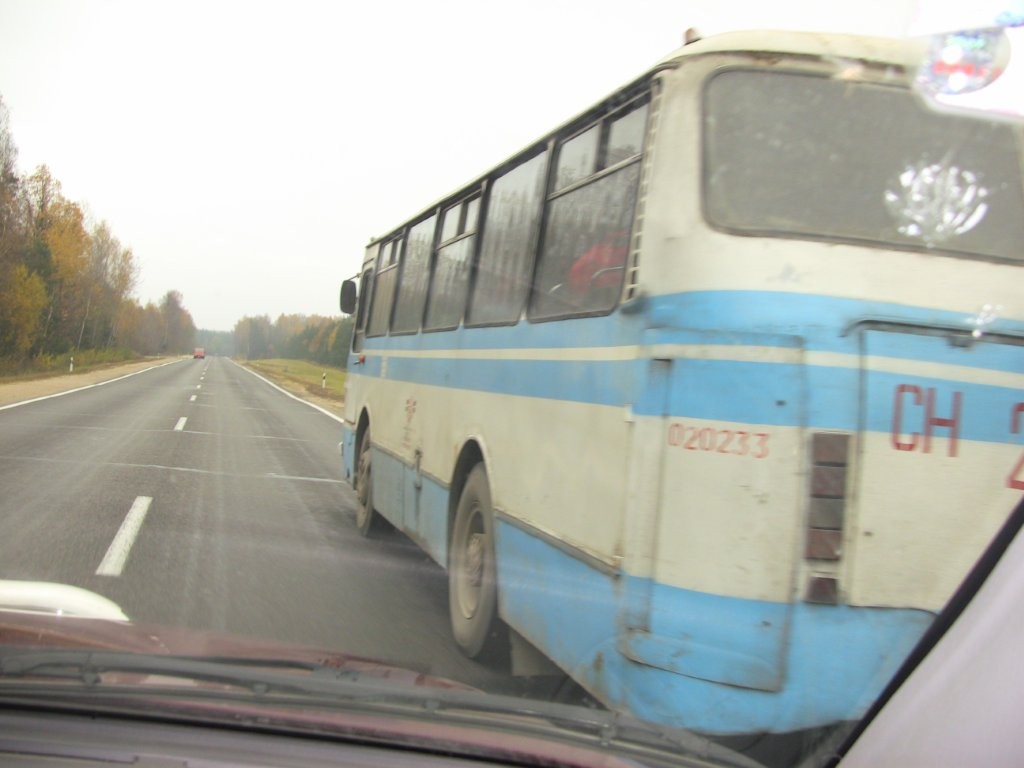
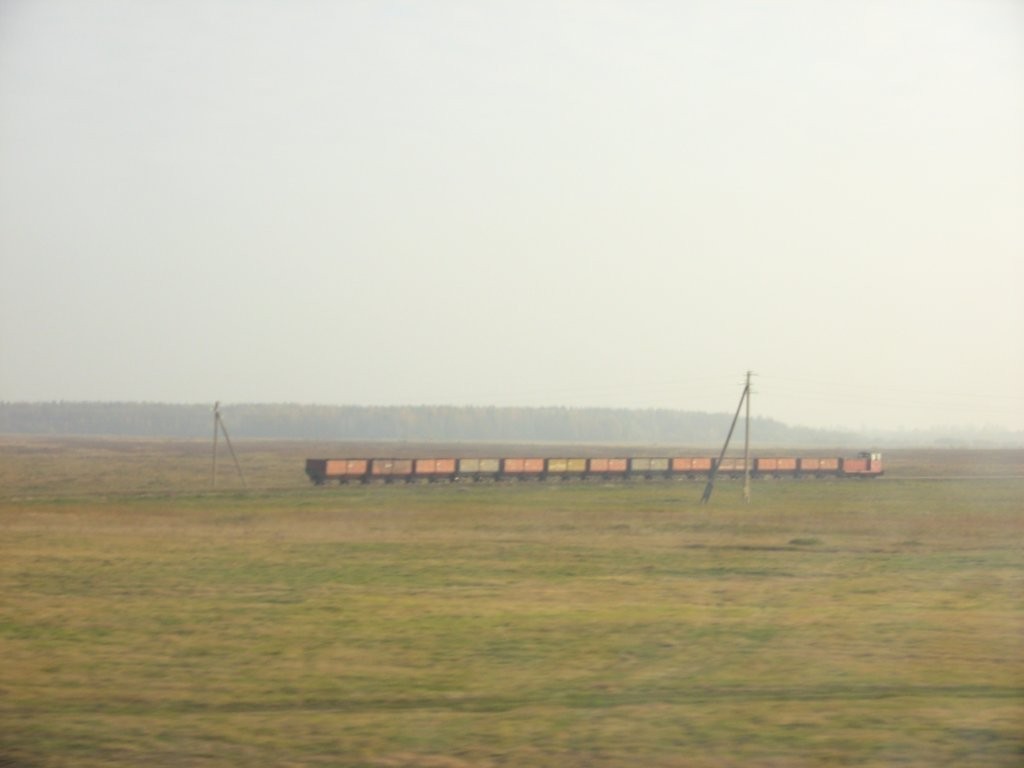
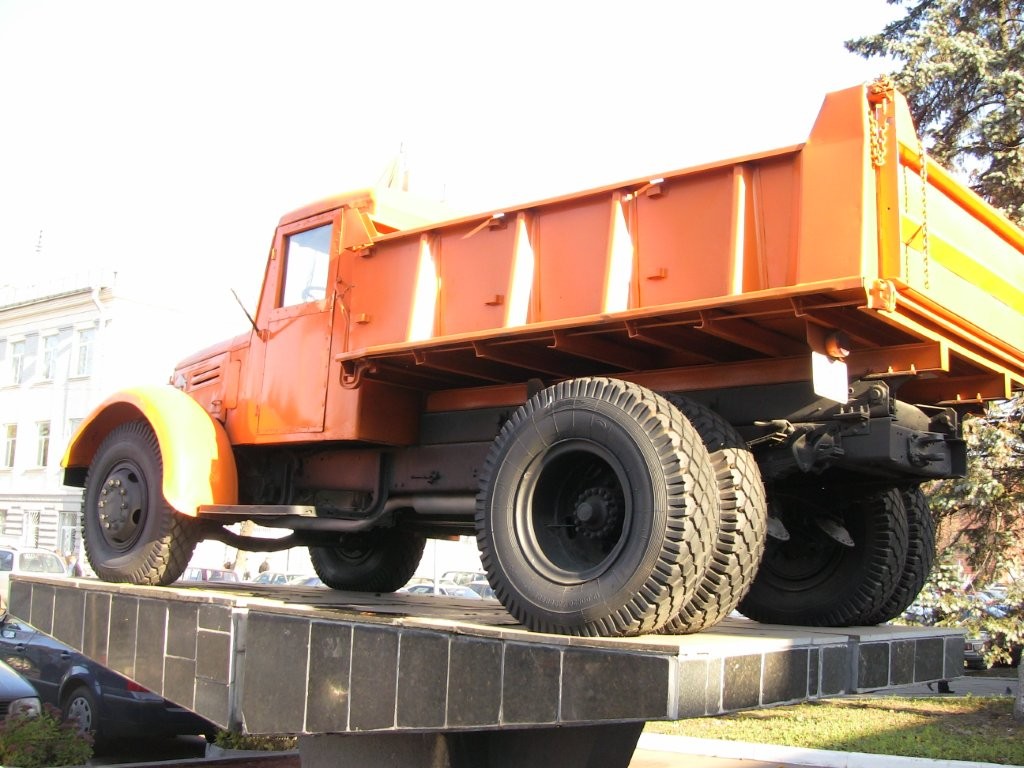
Behind the barrier, a wide road opened up, surrounded by endless forests. The traffic was light, the villages were well-groomed, and the landscape was surprisingly clean. Along the roads stood simple bus stops, sometimes decorated with colorful mosaics, sometimes simply painted blue or green. The roads were lined with old Zhiguli, Moskvich, Lada, MAZ trucks, and tractors, which slowly moved between the fields.
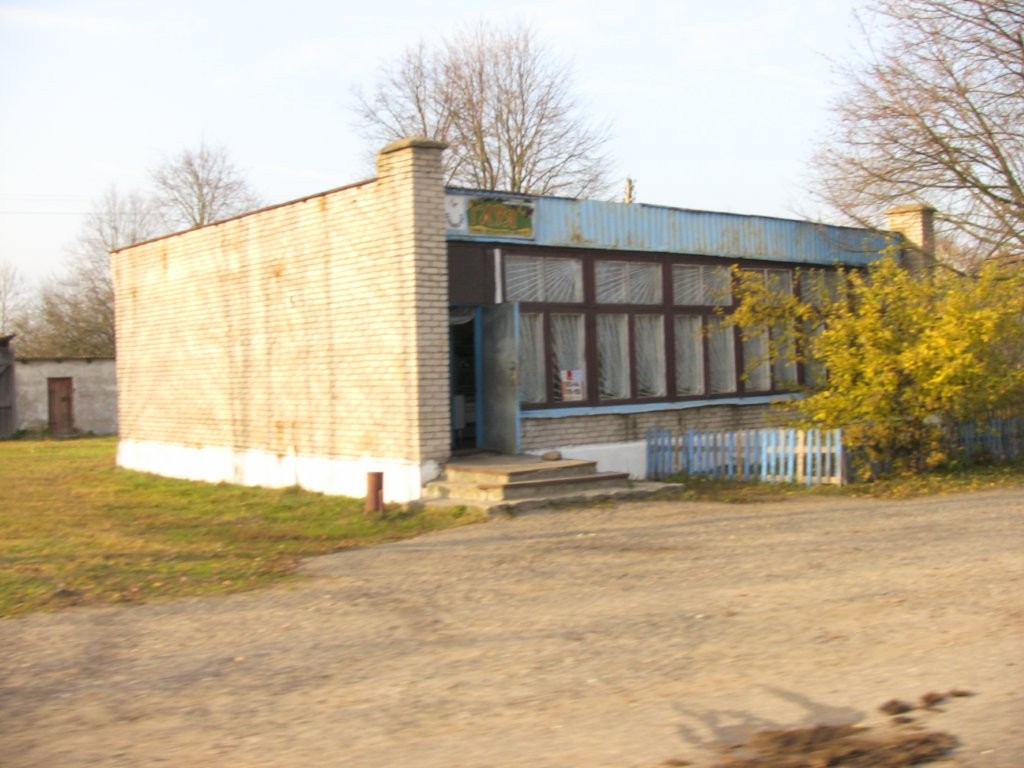
At first glance, Belarus seemed strict and closed. However, it was enough to stop at a small shop or ask for advice and behind the serious faces, a surprising warmth often emerged.
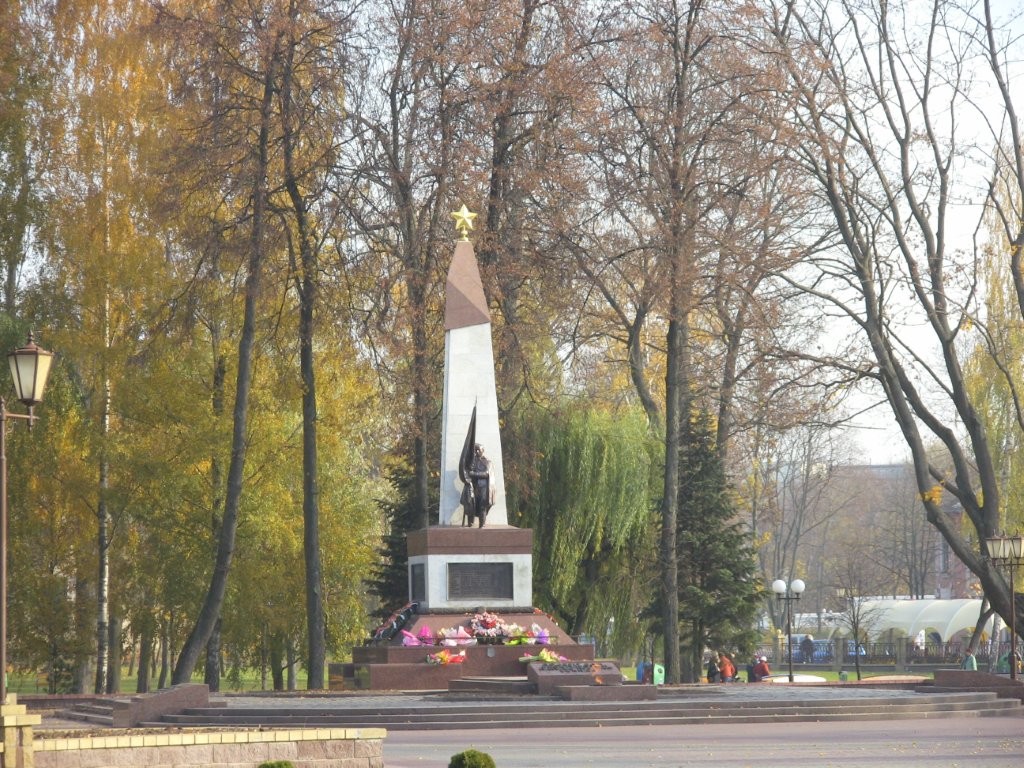
The first major stop was Brest. The city on the western edge of the country was closely associated with the dramatic events of World War II. A monumental monument towered over the fortress, before which one automatically lowered one's voice.
The Brest Fortress did not look like an ordinary museum. The broken walls, bullet holes and massive concrete monuments reminded us of the cruel fighting that had taken place there. In Belarus, the memory of the war was still very much alive. Almost every city and many villages had their own memorial to the fallen.
But beyond the fortress walls, Brest lived a peaceful everyday life. People sat in parks, small queues formed in front of shops, and buses and trolleybuses ran along the wide streets. Western advertisements were still rather the exception, and many shops resembled Czechoslovakian stores from the 1980s.
From Brest, the road led north to the Białowieża Forest, one of the last remnants of Europe's original lowland forest. Beyond the villages began a world of giant oaks, wetlands, and quiet forest paths.
The greatest symbol of the primeval forest is the European bison. It was not easy to see it in the wild, but the mere knowledge that these powerful animals were moving somewhere among the trees gave the place a special atmosphere. The morning fog hung between the trunks, animal tracks could be seen in the wet grass, and birds could be heard above the forest.
Off the main road, one passed through villages made up mostly of wooden houses. The shutters were painted blue, green or white, and flowers grew in front of the houses. Older women sat by the fences, chickens ran around the yards, and buckets of water stood by the wells. This was not an arranged tourist idyll, but ordinary life in the Belarusian countryside.
Grodno was one of the most beautiful cities on the entire trip. Its historic center, churches, and buildings reminiscent of the Polish and Lithuanian past were significantly different from the more modern Minsk. The Old Castle stood above the Neman River, and from elevated places, a view of the peaceful landscape of western Belarus opened up.
The further north we went, the less traffic there was. The landscape consisted of fields, birch groves, pine forests and small lakes. The roads were often of surprisingly good quality, straight and almost empty. However, on the side roads the asphalt quickly turned into gravel or packed dirt.
Navigation was not a given back then. A paper map lay spread out on the dashboard and the names of towns had to be compared with the Cyrillic letters on the signs. Getting lost was not uncommon. It was often unplanned detours that brought us to the most interesting places.
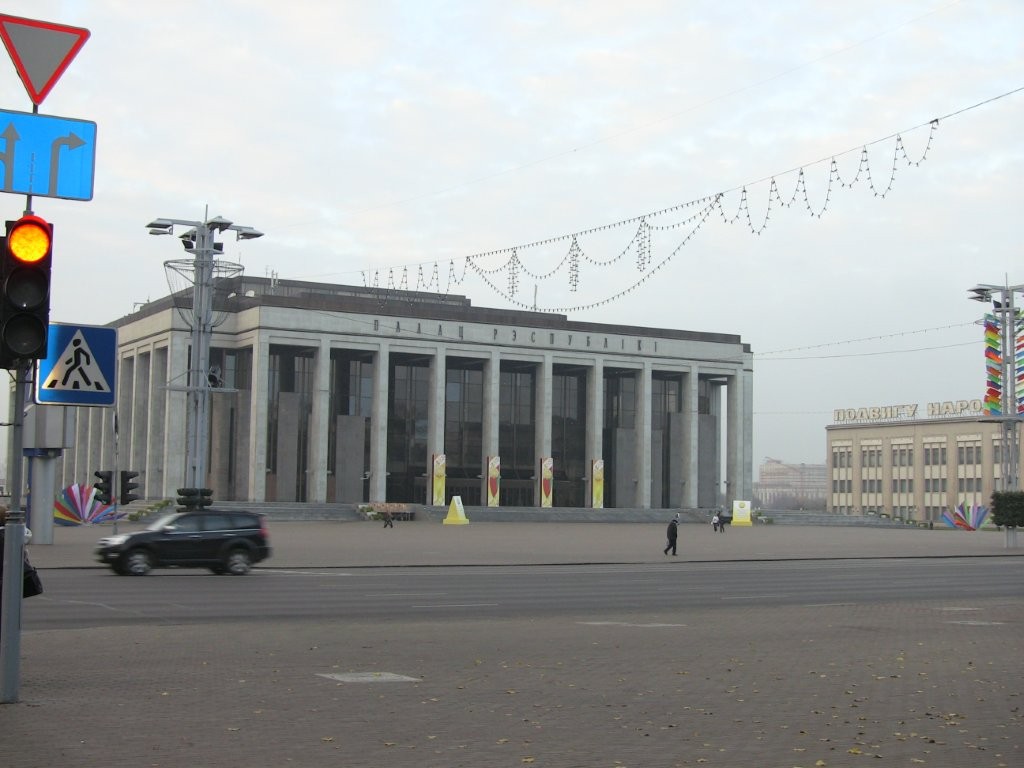
Arriving in Minsk was a surprise. After hundreds of kilometers of rural countryside, a large, clean, and exceptionally well-organized city appeared before us. Wide avenues, monumental buildings, vast squares, and almost perfectly manicured parks gave the impression of a capital built according to a single grand plan.
Minsk was almost destroyed during the war, so its center bore the distinctive signature of post-war Soviet architecture. There was plenty of space everywhere. The squares were huge, the subways were long, and the main streets were so wide that they reminded the Czech driver of an airport apron.
In the evening, the city center was lit up and the city seemed more lively. Young people gathered in parks and cafes, while the older generation preferred traditional restaurant canteens. The menu is simple: borscht, solyanka, pelmeni, draniki, meat, pickled vegetables and, of course, tea. Belarusian cuisine is not flashy, but it was a reliable way to fill up after a long day on the road.
Minsk was also a place of stark contrasts. Alongside the first modern shops, shops with a modest selection of goods still operated. New cars were parked next to Soviet veterans, and a few streets from the representative center, housing estates consisting of long rows of panel houses began.
The next route led through Vitebsk and Polotsk. Vitebsk, the birthplace of painter Marc Chagall, has a more artistic atmosphere than other Belarusian cities. Polotsk, on the other hand, is one of the oldest settlements in the country and was reminiscent of a time when Slavic, Baltic and later Russian influences collided here.
The north of Belarus is a region of lakes. The area around Braslav offers a completely different picture of the country than the plains in the south. The rolling landscape, forests and dozens of bodies of water have an almost Scandinavian feel. At the lakes we met several fishermen, on an old wooden boat, and occasionally a Belarusian family who had come from the city for the weekend.
A light haze hung over the water in the evening. The forest smelled of resin and smoke from fires. At times like these, it was easy to forget that we were in a country that most people only knew from political news.
The road through Mohylev towards Gomel showed a more industrial face of the country. On the outskirts of the cities stand large factory complexes, warehouses and long rows of panel houses. Above the entrances to some villages, Soviet symbols, monuments and slogans celebrating work, the army or victory in the war remained.
Public space is exceptionally clean and well-groomed. The grass along the road is always mowed, the curbs are painted, and there is almost no trash to be seen. At the same time, however, one could feel that the state was present practically everywhere. Photographing railway stations, bridges, military facilities, or some official buildings could attract attention. A stranger with a camera was still an unusual sight.
The Gomel region also bore the invisible legacy of the Chernobyl disaster. Parts of southeastern Belarus were heavily affected by radioactive fallout. Maps showed places to avoid, and warning signs stood along some roads. The landscape looked peaceful and innocent – the forests, fields, and abandoned houses did not betray what had happened there twenty years earlier.
In southern Belarus lies Polesie, a vast area of wetlands around the Pripyat River. Roads here lead across endless plains, past river arms, meadows and swampy forests. Some villages seemed almost cut off from the outside world.
For generations, life here has been governed by water and the seasons. People fished, picked mushrooms and berries, and tended small gardens. The markets sold potatoes, cucumbers, homemade honey, dried fish, and jars of pickled mushrooms.
It was in the countryside that the most powerful encounters were created. We sought a common language with the help of a few Russian words, gestures and a map. An invitation to the table often meant tea, bread, salami, pickled vegetables and sometimes a glass of homemade alcohol.
It was not easy to refuse hospitality, and it was almost impossible to leave without food supplies for the next journey.
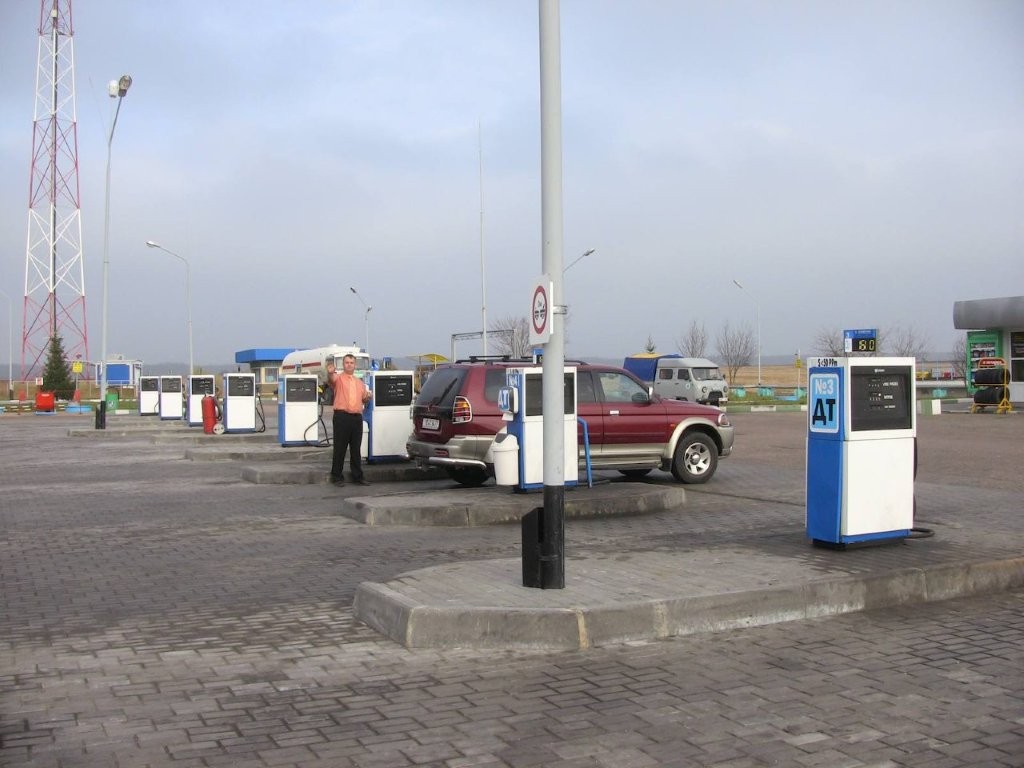
Traveling around Belarus twenty years ago was not a comfortable tourist holiday. It required preparation, patience and respect for local rules. Gas stations did not necessarily accept credit cards, accommodation was sometimes difficult to find, and communication was not easy without knowledge of Russian.
But the reward was the opportunity to see the country before modern technology and global brands began to change it significantly. Back then, Belarus offered empty roads, deep forests, thousands of lakes, wooden villages and cities where the Soviet past was still a part of everyday life.
In the end, the strongest memories were not the monuments or the big cities. It was the silence of the Belarusian forests, the morning fog over the lakes, the straight roads disappearing beyond the horizon, and the people who at first looked distrustful, but after a short conversation were able to open the door of their house and set the table for a completely unknown traveler.
Belarus was not a simple country twenty years ago. However, it was authentic, mysterious and exceptionally strong for travelers. Anyone who traveled through it back then, from the Polish border to the Russian border and from the northern lakes to the swamps of Polesie, took with them the memory of a Europe that almost no longer exists today.




Corsica: From the mountains to the wild sea
Corsica is rightly called the island of beauty. In a relatively small area, it offers high mountains, deep gorges, impenetrable forests, arid plains and a coastline with a clear sea.
In just one day, you can drive along a rocky mountain road, swim in a river hidden between rocks, and watch the sunset over the Mediterranean Sea in the evening.
Our goal wasn't just to drive around Corsica on the main roads. We wanted to see it from all sides – from the northern coast through the mountainous interior to the wild south.
It wasn't about overcoming extreme obstacles, but about real travel.
We arrived on the island by the morning ferry to Bastia. The very arrival at the port had a unique atmosphere. Behind the old houses, green slopes rise steeply and low clouds hung over the city.
Corsica reminded us right from the start that the sea and mountains exist right next to each other here.
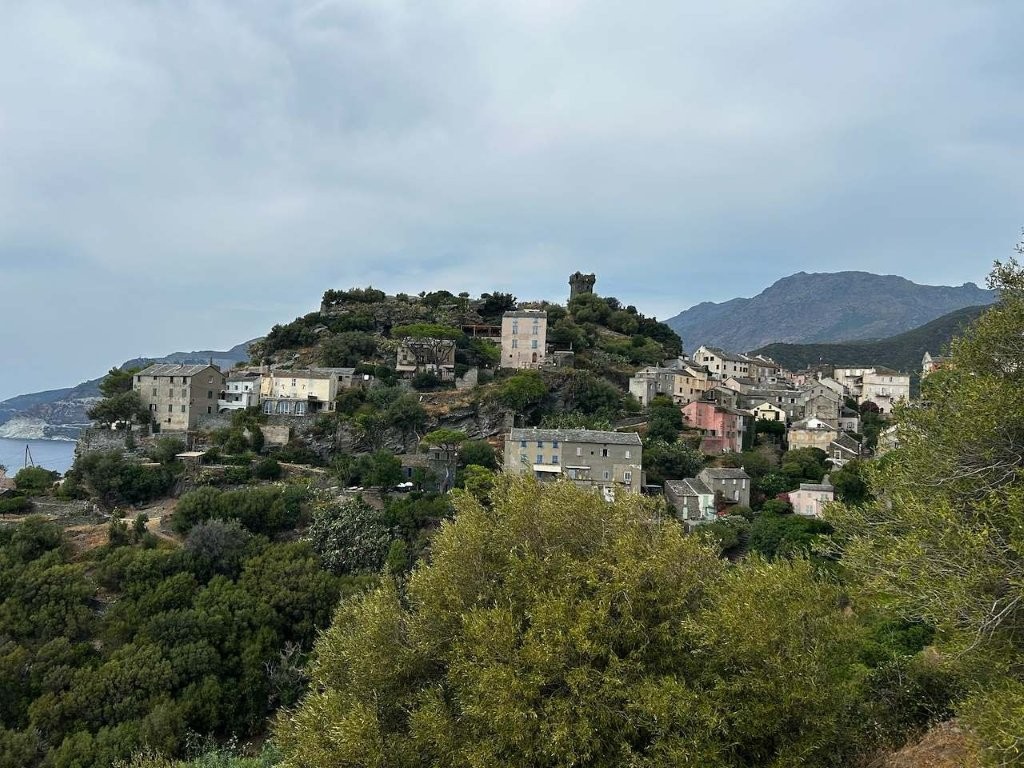
After getting off the ferry, we headed to the Cap Corse peninsula. The narrow coastal road wound high above the sea, offering views of small fishing ports, stone towers, and villages clinging to the hillsides.
In some places the road is barely wide enough for two cars. With a larger expedition truck, you have to slow down before every bend and expect a bus or van coming the other way.
Cap Corse is not a place for fast driving. The distances on the map look short, but the journey takes much longer than one would expect.
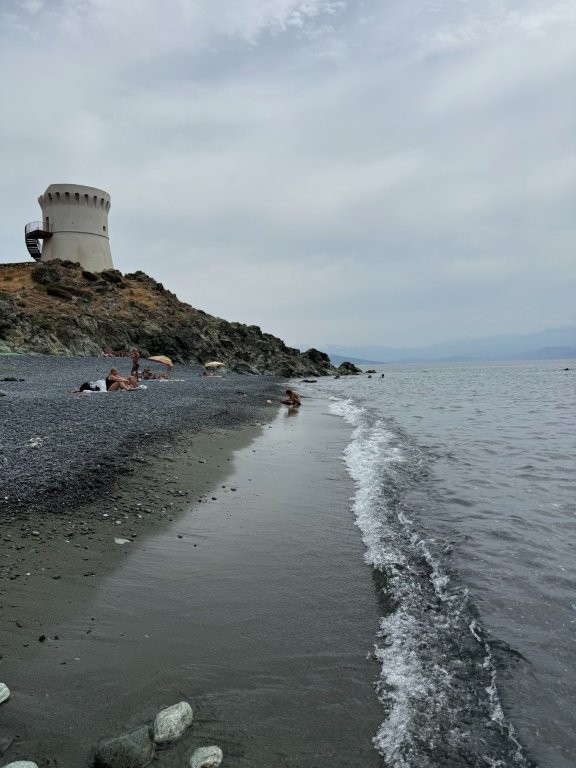
But the constant twists and turns are offset by the beautiful views. We stopped at abandoned watchtowers, small harbors, and lookouts where the waves crashed against the dark rocks below us.
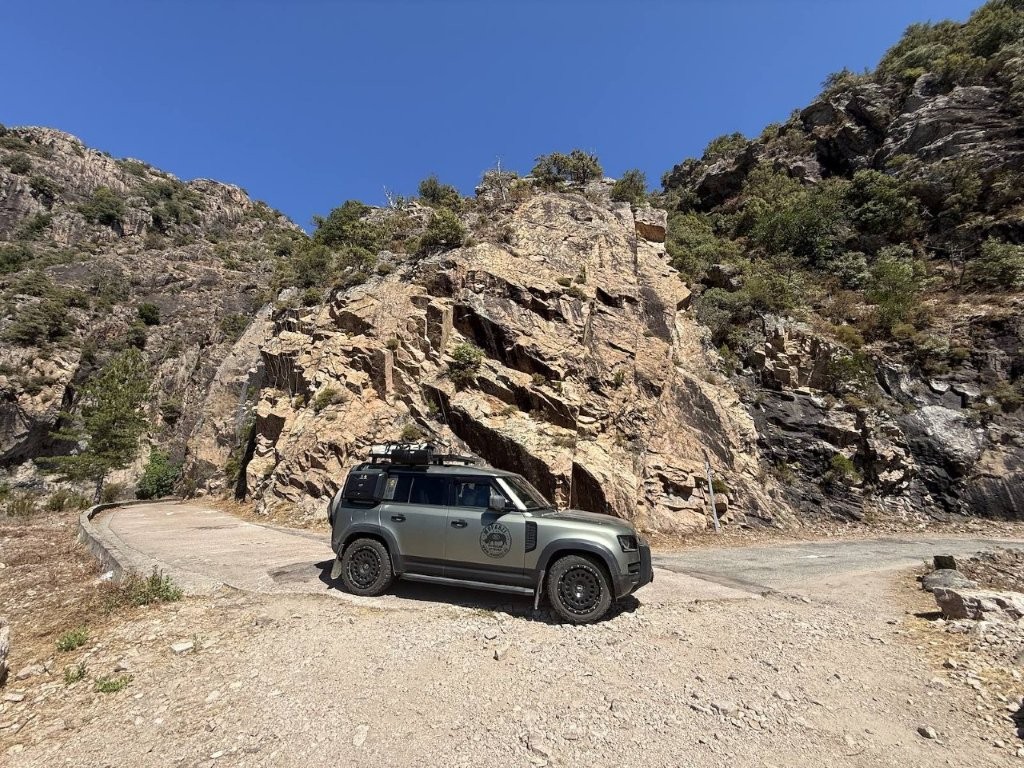
From the north we continued towards the Désert des Agriates. The name “Agriates Desert” might sound like you’d expect sand dunes here. In reality, it’s a wild, rocky landscape covered in low vegetation – maquis.
Some of the coastal access roads are rough, dusty and full of rocks, potholes and deeper ruts. In dry weather this is not an extreme terrain, but with a fully loaded car you need to drive slowly.
After rain, the nature of the roads can change quickly.
The reward for a few hours of slow driving are secluded bays with white sand and turquoise water. When we finally reached the coast, the hot engine quietly crackled and the wind brought the smell of the sea mixed with the aroma of wild herbs. It is at moments like these that one understands why one travels in an off-road vehicle. It is not just about the ability to overcome an obstacle, but the opportunity to get to places that remain off the usual tourist routes.
From the coast we headed inland, towards Corte. The landscape began to change rapidly.
The dry plains gave way to chestnut forests, steep slopes and rock walls. The road became more and more winding and the temperature gradually dropped.
Corte feels like the true mountain heart of the island. The citadel, built on a high rock, towers over the city and the mighty Corsican mountains rise around it. The narrow streets of the old town are filled with the aromas of coffee, pastries and local cured meats.
After days spent on the road, we replenished our food and water supplies.
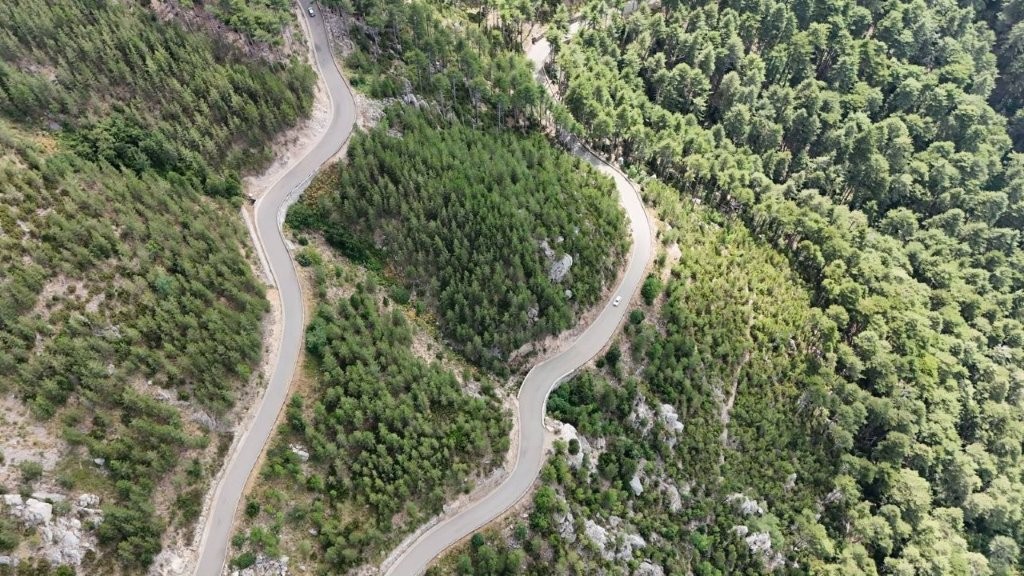
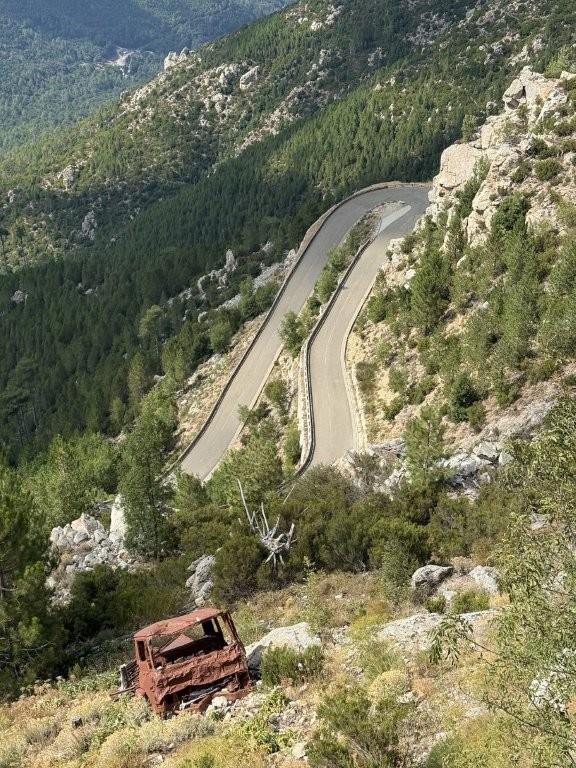
After Corte we left the main road and took smaller mountain roads. Some were narrow, cracked and covered in places with fallen rocks.
However, the biggest problem was not the exits or rocks, but the branches interfering with the road and the very limited space for turning.
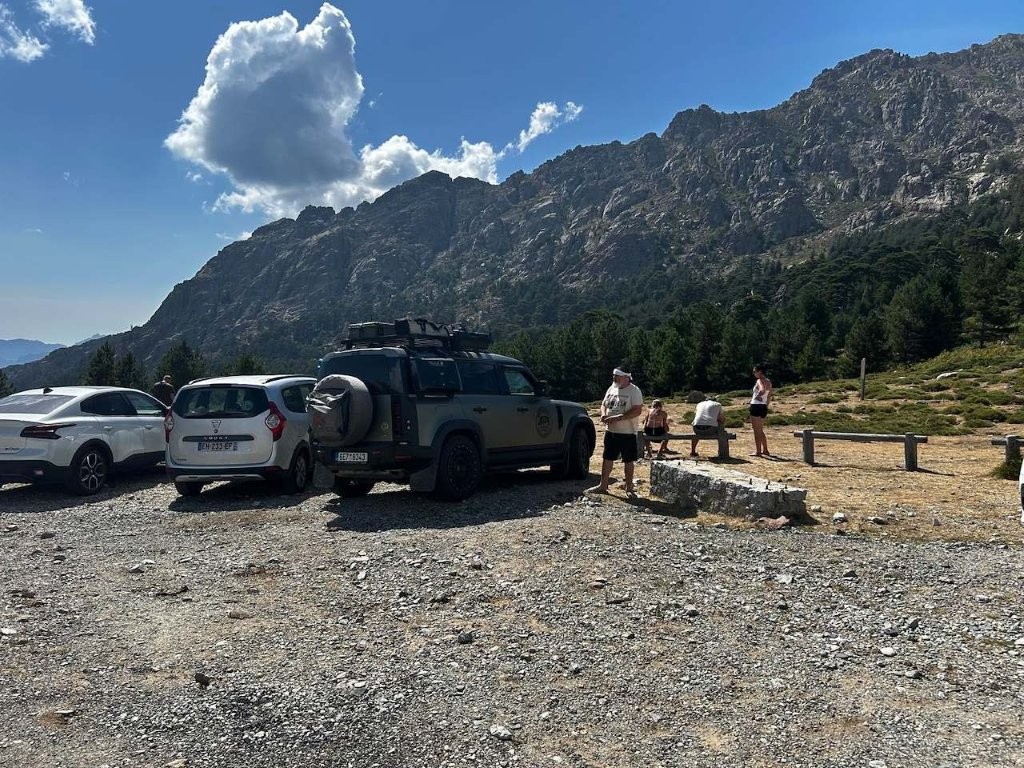
The Corsican hinterland is a completely different world from the coastal resorts. Peaks towering over two thousand meters rise above the road and icy rivers flow deep below. In the mountain forests, we often did not meet another car for many kilometers.
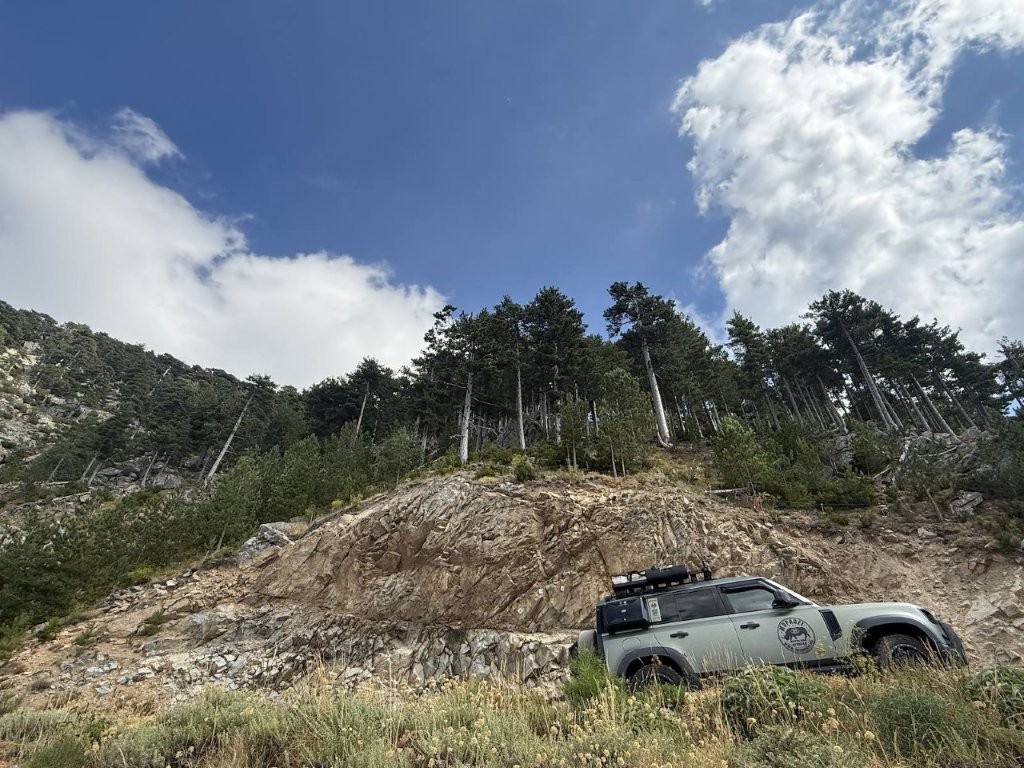
One of the most impressive parts of the journey was the drive through the passes and forests in the center of the island. The weather can change in a matter of minutes. The sun gave way to fog, which shrouded the surrounding mountains and turned the rocky road into a mysterious trail.
In Corsica, caution is more important than speed. The roads are often narrow, waterlogged or damaged by landslides. If you are unsure, it is better to first walk over an obstacle before continuing.
In the afternoon we stopped at a mountain river. The water was perfectly clear and formed natural pools between huge boulders. After a hot day behind the wheel, swimming in the icy water was almost a cleansing ritual.
In the evening we prepared a simple dinner and listened only to the flowing of the river and the rustling of the forest.
The next part of the journey took us across the island to Ajaccio. As the crow flies, the west coast is not far away, but in the Corsican mountains, distances mean nothing. The roads climb into passes, skirt deep valleys, and descend again to the river, only to start another exit.
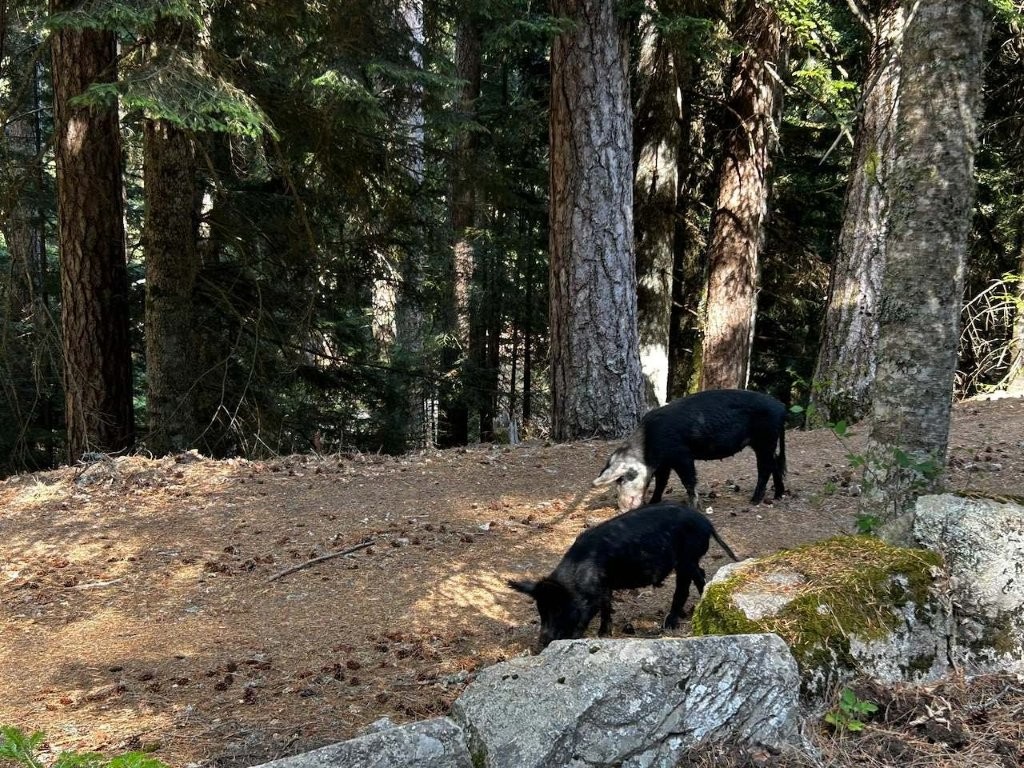
Constant concentration is required behind the wheel. Animals often roam freely here. A herd of goats may appear around the bend, pigs resting by the roadside or a cow standing in the middle of the road. Corsicans also drive briskly on familiar roads, so rear-view mirrors are as important as the view in front of the bonnet.
When we caught sight of the sea in the distance after a few hours, it felt like we had crossed an entire continent. Green mountain forests gave way to red rocks, the smell of resin gave way to salty air, and the west coast opened up before us.
The coast around Porto and the Calanques de Piana rock formations are among the most dramatic in Corsica. The red cliffs here drop almost vertically into the sea and a narrow road is carved right into their walls. In the setting sun, the landscape takes on an orange to red hue.
Low rock overhangs, tight turns and small parking areas don't give much space. Nevertheless, the evening over the west coast was one of the most powerful moments of the entire trip.
The sun was slowly disappearing over the horizon, the sea was calm and the red rocks were gradually darkening. Dinner was being prepared on the stove and a bottle of wine was on the table. After a hard day, we needed nothing more.
From Ajaccio we continued south. The road alternated along the coast and inland again. We drove through a landscape of cork oaks, granite rocks and small villages where time seemed to have stopped.
The surroundings of Sartène have a rugged and authentic feel. The stone houses, narrow streets and surrounding mountainous landscape remind us that Corsica has always retained its own character. It was in the south that we again sought out smaller roads leading to the coast and into the hills.
Some routes ended with a barrier or a ban on entry. This must be respected in Corsica. Many lands are private and in the summer, access to the forests is restricted due to the risk of fires.
The real adventure lies in finding legal routes and traveling through the landscape with respect.
Bonifacio welcomed us with its bright white cliffs. The old town stands high above the sea and, when viewed from the harbor, looks as if it is about to collapse into the water at any moment. Along the mountain roads and dusty tracks, the restaurants and bustling streets felt almost like a return to civilization.
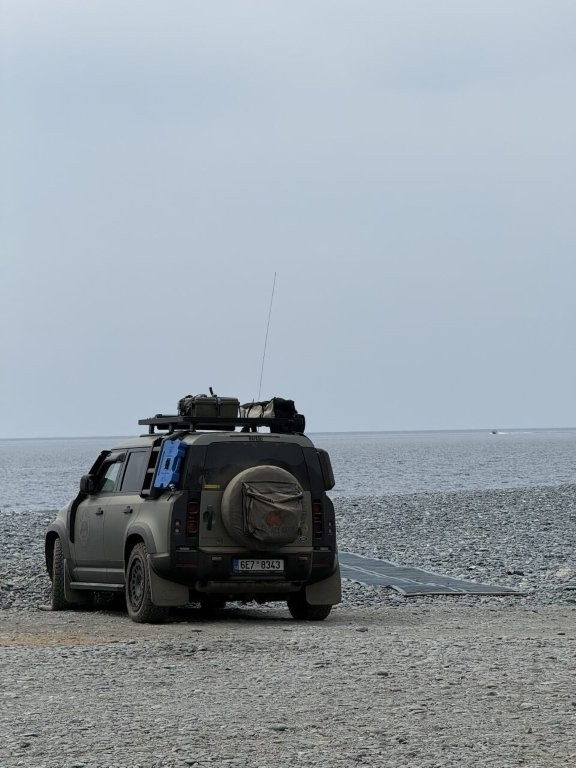
For our last night, we headed out of town again. We found a legal spot near the shore where we could hear the soft surf.
We sat next to the car and thought about the entire journey. The dusty roads of Agriates, the cold rivers in the middle of the mountains, the fog in the passes, the red rocks in the west and the white cliffs of Bonifacio.
Corsica showed us many different faces in just a few days.
In the morning we packed up camp and headed to the port. The car was covered in dust, there were a few fine scratches from branches on the sides, and the interior smelled of a mixture of coffee, the sea, and mountain forest.
They were small traces of the road that we definitely didn't want to wash away right away.
Corsica is not a place to be explored in a hurry. Although the distances look small on the map, each journey can turn into a day-long adventure. However, the slow pace is its greatest asset.
A 4×4 vehicle opens the way to more remote beaches, mountain viewpoints and forgotten villages. But at the same time, it requires respect for nature, local people and the rules of movement in the landscape.
Not every line on the map is a public road, and not every beautiful place is suitable for spending the night.
Corsica taught us that a true expedition doesn't have to take place thousands of kilometers from Europe. Sometimes all you need to do is cross the sea, leave the main road and head into the mountains. Around the next bend, there may be a rocky road, a herd of goats, an abandoned village or a view that makes it worth stopping the engine and just being silent for a moment.
And that's the magic of Corsica. It's wild, beautiful and unpredictable. Once you've crossed it, the journey home from the port is no longer just a return from an ordinary holiday.
It is a return from a little adventure that will stay with you long after the last Corsican dust has disappeared from the bodywork.



This online store stores cookies that help it function properly. By using our services, you agree to their use.